


The Rarest Rolleiflex TLR: 2.8E3

Source:http://rollei.org.uk/rolleiflex-2-8-e3/
The above camera has always been something of an enigma in the UK, where so far as known, it was never formally advertised or listed for retail sale. Based on research to date, the evidence points towards 2,000 having been made in response to a USA mail order house order leaving 25 for sale by Rollei on the German domestic market. However, I have a catalogue dated January 1966, issued by the French importer Telos S.A. which shows the camera as available until stock is exhausted, fitted with Planar 80mm lens code XOCUP at a price of 1,322 francs. The entry is rubber stamped ‘plus livrable’ (no longer deliverable).
I was therefore excited to see an example of this camera in a Christies’ auction last summer. Not only was it virtually mint, it included a mint ever ready case, English instructions, original box and an unused R.F. Hunter guarantee card. I was sufficiently motivated to place a bid although no urgent need existed for any more f2.8 Rollei TLRs. The bid was successful and I duly collected the camera.
Careful examination of the camera, its associated packaging and accessories revealed no further details of provenance. I made contact with Michael Pritchard at Christies but he was unable to offer any information beyond the fact it had been consigned by an elderly lady whose husband had originally bought it and had either now died or become disabled. Michael agreed to pass on a letter to the consignor, but no response was forthcoming – and indeed if there was one, it could easily have gone astray in the rebuilding and reorganisation at Christies.
It seems clear from the presence of the Hunter guarantee card that the camera was sold legitimately in the UK, perhaps to a buyer who had found out from the factory that it was in production and who did not want the built-in exposure meter found in the 2.8F (and the absence of which, makes the camera less costly to repair). Ian Parker comments in his Rollei Collectors’ Guide that he believes all 2.8E3’s were fitted with Xenotar lenses and he would like to hear of any with a Planar. Well, here is one with a Planar – No.3495721 in camera body shown as ‘2.8E3 2360840’. The mid-series body number suggests the camera was part of the normal production run rather than a prototype or an exhibition item, whilst the overall mint condition suggests the lens was installed from new and not under repair as might be the case with a well-worn body.
Handling and performance of this camera is very similar to that of the 2.8F or 2.8GX as might be expected. Despite its long and largely inactive existence, most functions are operating correctly except that the depth of field indictor sometimes fails to change when the aperture control is moved.
The price I paid, as I recall, was little lower than for a 2.8F in similar condition.
Rolleipar Bayonet II
As readers will recall, I started some discussion about the Rolleipar a few issues ago in reference to the Kenneth Tydings Camera Guide. I mentioned also that they seemed to be quite hard to find today, that I did not have one, and those that did exist would almost certainly be ‘push-on’ or Bayonet 1. I was therefore most surprised but gratified to find one at a reasonable price in Bayonet II at Collectable Cameras of East Yorkshire. It was supplied in a normal 1960’s red and cream Rolleinar box but this is almost certainly not original as it is far too big for 13 this accessory! The lens bears the inscription ‘Rolleiparkeil 2 – 34Ø’. Inside the lens ‘6.5’ is inscribed, by hand. Condition is near-new and the lens is uncoated, unlike the Rolleinars. Books by the 3P’s (Parker, Pearlman and Prochnow) make no mention of a Bayonet II Rolleipar so we must assume it is quite rare. As always, thoughts from members about the above items will be most welcome.
Rollei bayonet filters etc
Some readers may have noticed that these seem to be becoming less available in the second-hand market than once was the case, whilst new ones are usually available ‘to order’ from firms such as B&W, Heliopan etc. The latter involves a supply chain via dealer, importer and manufacturer and so is not likely to be very quick. It was therefore refreshing to call at the SRB Film stand at the recent ‘Focus on Imaging’ and speak with their MD Mr. Broomhead. He confirmed they are still keen to supply the Rollei market and can offer two options:
- Bayonet to screw adapter to allow use of common screw-fit filters.
- Complete bayonet-fit filter, resin-glazed.
The following is a guide to prices, but SRB strongly recommend customers contact them for a quotation of cost and timescales which will vary according to exactly what is required.
- Lens Accessory Price Rollei I 46mm £15.35
- Rollei II 46mm £15.35 Rollei III 46mm £15.35
- Rollei IV 49mm Ask for quote Rollei VI 67mm,72mm,77mm £20.85
- As a general rule, glazed filters will be the above prices plus £6.95.
I have had a number of SRB filters in use in Bayonet IV for some years and have found them entirely satisfactory. In the case of Bayonet IV the glazed filter option is preferable to the adaptor and screw-fit filter; in the latter case very minor vignetting is visible in the corners of the image. Contact details for SRB are as follows:
SRB-Griturn Ltd., Unit 21D, Icknield Way Farm, Tring Road, Dunstable, Bedfordshire LU6 2JX.
Tel: 01582 661878
Email: enquiries@srb-griturn.com
Web: www.srb-griturn.com
SRB are a manufacturer so there is no dealer/distributor/importer chain.
My interest in the matter was rekindled by having recently purchased a near mint Rolleiflex 3,5F requiring Bayonet II accessories after, for many years, having used only Bayonet , and IV cameras. Some readers may wonder what happened to Bayonet V. The answer is that Rollei ‘Size V’ is simply the commonly available 67mm screw fitting which is used on the TLR Mutar units. Rollei did for a while market a limited range of these filters complete with leather case which continue to surface occasionally on the second-hand market. Details can be found in Claus Prochnow’s Rollei Report 2, page 24-505.
Update on the Rolleiflex 2.8E3
As published in CRU Issue 10
Since writing in the last issue of the magazine, I have now had the chance to carry out a little more research. It turns out that this camera was `marketed’ in the UK, although in a very low-profile way. A search through old publicity shows that it did appear in an R.F. Hunter catalogue in 1963.
As will be seen, the catalogue was only made available to dealers and other `trade’ customers, so the great majority of potential purchasers would not have seen the entry. Additionally, it is tucked away at the back of the Rollei section of the book behind the more commonly available cameras such as the 2.8F, 3.5F and the T. The camera is stated as being intended for professionals, the main selling proposition presumably being that it cost somewhat less than the 2.8F due to the absence of a built-in exposure meter.
Clearly, even amongst the professional and trade community the take-up must have been extremely small and understandably so, because the meter in a 2.8F or 3.5F is merely a guide which can easily be ignored in favour of the user’s own judgement or a hand-held meter. On the other hand, its presence can be useful at times and the readings are generally accurate. At least, discovery of this catalogue does explain why I was able to obtain a Planar lens camera with a UK guarantee card.
No doubt its original purchaser was in the trade or simply knew a friendly dealer who told him about it and ordered it for him! I also attach a copy of the sales briefing for dealers, which makes interesting reading. It is all very valid but sadly these fundamental truths have not done Rollei or its dealers much good over the last 45 years. However, at least Rollei (at time of writing ed) are still with us, which is more than can be said of some of the other manufacturers in the book!
Shooting Film: Interesting Portraits of Celebrities with Rolleiflex TLR Cameras
Shooting Film: Interesting Portraits of Celebrities with Rolleiflex TLR Cameras.
Without any doubt was the introduction in 1929, of the first Rolleiflex Twin Lens Reflex (TLR), a sensation: an as ingenious as simple principle that quickly made the Rolleiflex THE must have professional camera all over the world. Producing high quality 6×6 cm square negatives in a compact very easy to operate camera, with the best lens available.
Ther was no photographer who would not master one, no apprentice who would not wish to own one. For the professional, the Rolleiflex was like a gift from heaven, it meant a radical change in his/her creative work. Being able to work fast with a large size negative, light weight and superior quality made the choice as simple as important. There was no newspaper, no magazine, no photographic book that would not have some Rolleiflex photos in their publications. For decades, Rolleiflex cameras would have a decisive effect on photographic history. Many world-famous images originated from that small piece of fine mechanical art made bij the factory from Franke and Heidecke in Braunschweig, Germany.
Rolleiflex is the name of a long-running and diverse line of high-end cameras originally made by the German company Franke & Heidecke, and later Rollei-Werk. The “Rolleiflex” name is most commonly used to refer to Rollei’s premier line of medium format twin lens reflex (TLR) cameras. (A companion line intended for amateur photographers, Rolleicord, existed for several decades.) However, a variety of TLRs and SLRs in medium format, and zone focus, and SLR 35 mm, as well as digital formats have also been produced under the Rolleiflex label. The 120 roll film Rolleiflex series is marketed primarily to professional photographers. Rolleiflex cameras have used film formats 117 (Original Rolleiflex), 120 (Standard, Automat, Letter Models, Rollei-Magic, and T model), and 127 (Baby Rolleiflex).
Here’s a collection of interesting portraits of celebrities with Rolleiflex TLR cameras:
 |
| Albeto Amarilla with a Rolleiflex in Imago Mortis, 2009. |
 |
| Alexa Chung and a Rolleiflex – shot for INStyle magazine. |
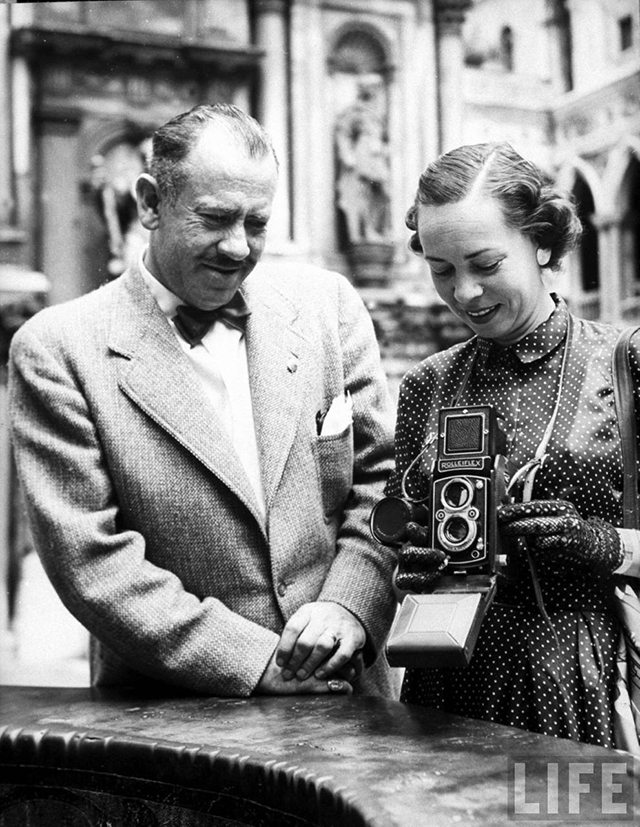 |
| American novelist John Steinbeck standing beside wife, writer Elaine Andersen, who is using Rolleiflex camera around neck in Venice, Italy, 1947. |
 |
| Benedict Cumberbatch with Rolleiflex 3.5F and Misha Handley in Parade’s End. |
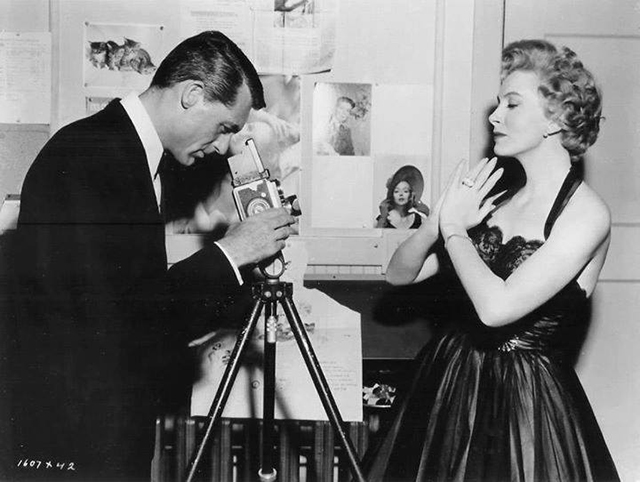 |
| Cary Grant with a Rolleiflex and Deborah Kerr |
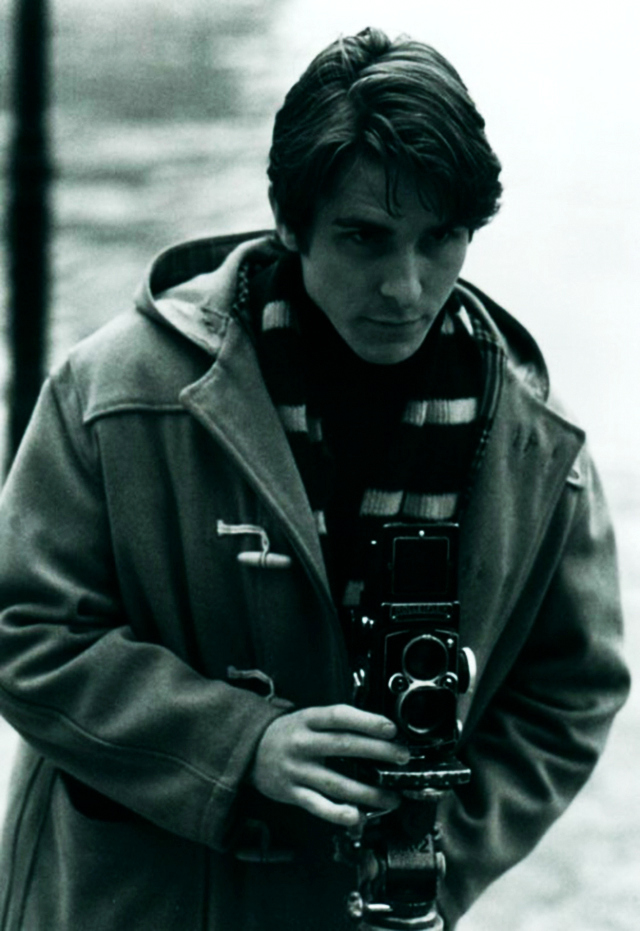 |
| Christian Bale |
 |
| Doris Day with a Rolleiflex in 1953 |
 |
| Edward Norton |
 |
| Elisabeth Taylor with a Rolleiflex 3.5E |
 |
| Fred Astaire with a Rolleiflex and Audrey Hepburn in Funny Face, 1957. |
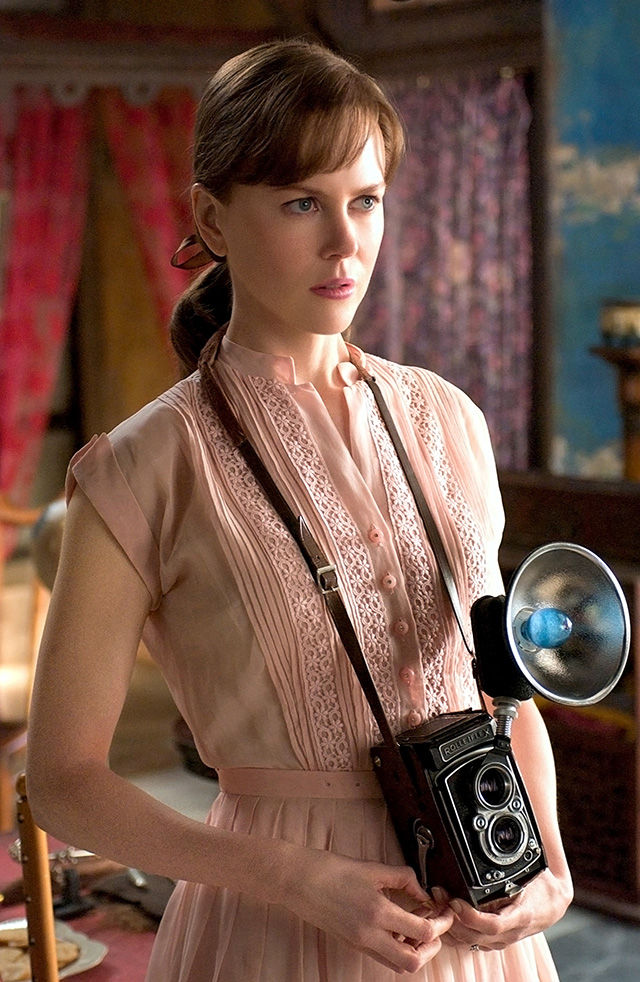 |
| Nicole Kidman as iconic American photographer Diane Arbus in Fur: An Imaginary Portrait of Diane Arbus, 2006. |
 |
| Gary Cooper with a Rolleiflex D, 1949 |
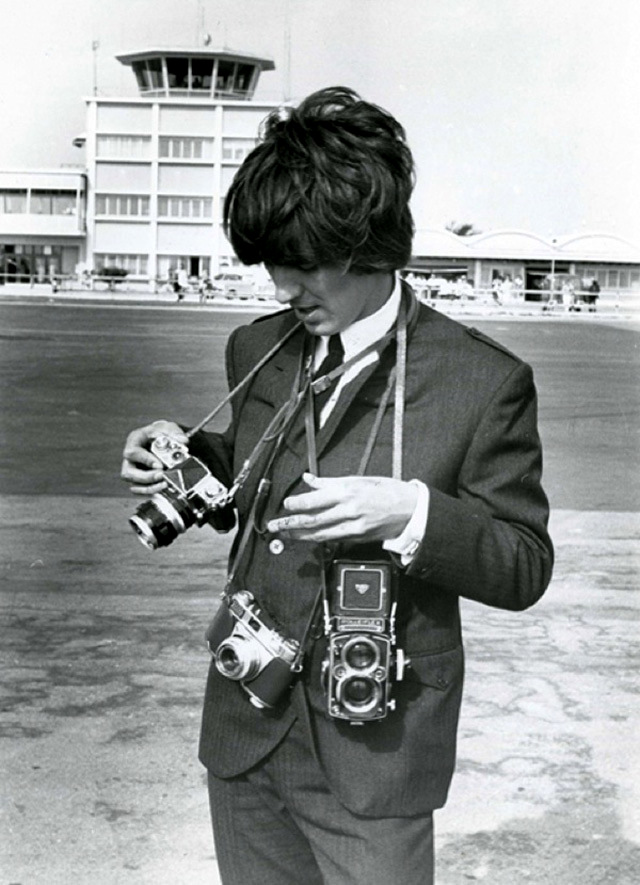 |
| George Harrison with (left to right) a Nikon F, a Kodak Retina IIS and his Rolleiflex, c. 1960s |
 |
| Grace Kelly, Monte Carlo 1972. |
 |
| James Dean posing Pier Angeli for a photo with his Rolleiflex in 1954. |
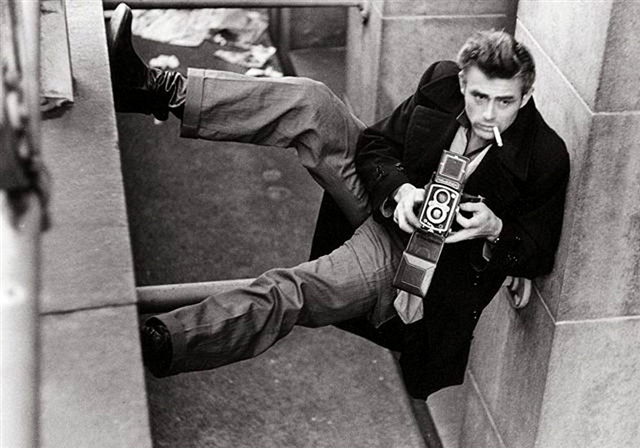 |
| James Dean sitting in window well inside his apartment. New York, 1954. |
 |
| James Franco as James Dean in James Dean, August 2001. |
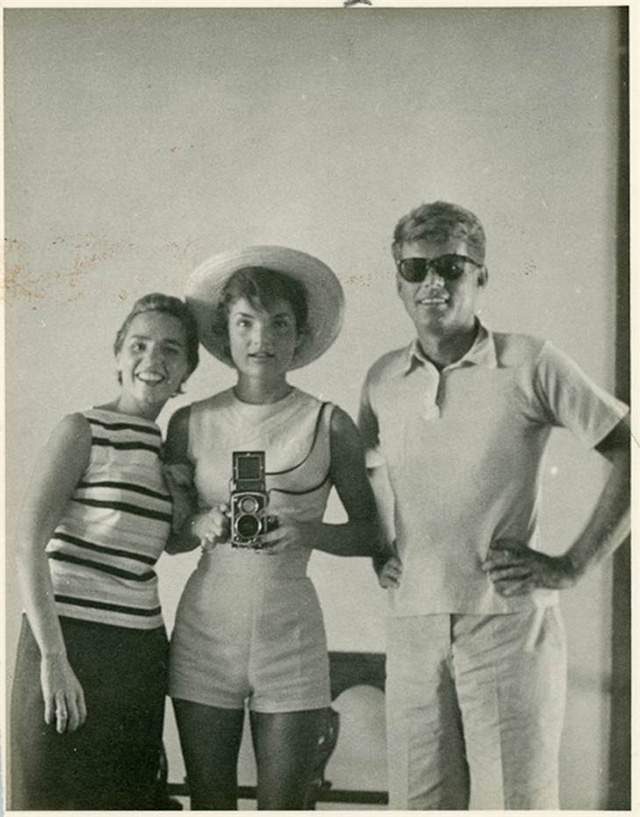 |
| John F. Kennedy is pictured with his wife Jackie and sister-in-law Ethel Kennedy in 1954. |
.jpg) |
| Laurence Olivier and Vivien Leigh in Fire Over England, 1937. |
 |
| Liz Taylor with a Rolleiflex. |
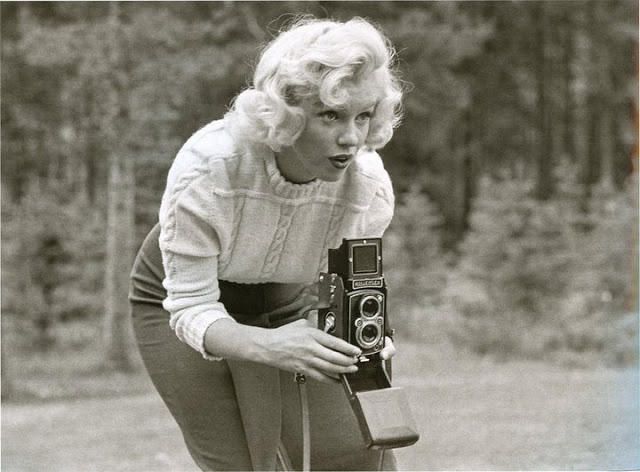 |
| Marilyn Monroe with a Rolleiflex in Canada, 1953. |
 |
| Morrissey with a Rolleiflex on a Vespa. |
 |
| Natalie Portman with a Rolleiflex 2.8GX. |
 |
| Paul McCartney, c. 1960s |
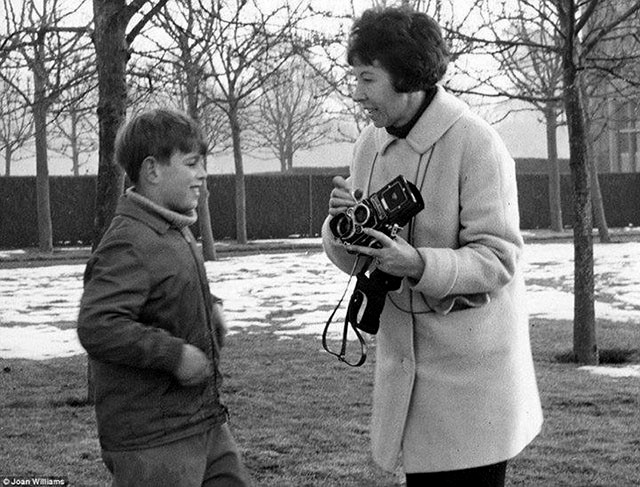 |
| Prince Andrew, aged nine, talks with photographer Joan Williams about her camera in 1969. |
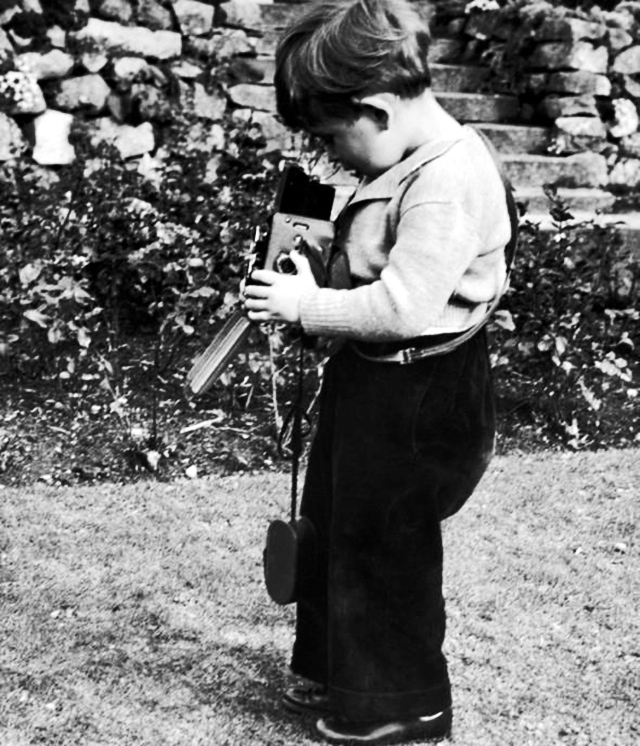 |
| Prince Charles with a Rolleicord in 1952. |
 |
| Richard Avedon and Fred Astaire in Paris, 1956. |
 |
| Richard Avedon and Sophia Loren, New York, 1966. |
 TLRgraphy