Seriously… Rolleiflex, SGD 525.00
There is kind of saying that… if you are into medium format photography, you must have a Rolleiflex…
What is amazing about Rolleiflex?
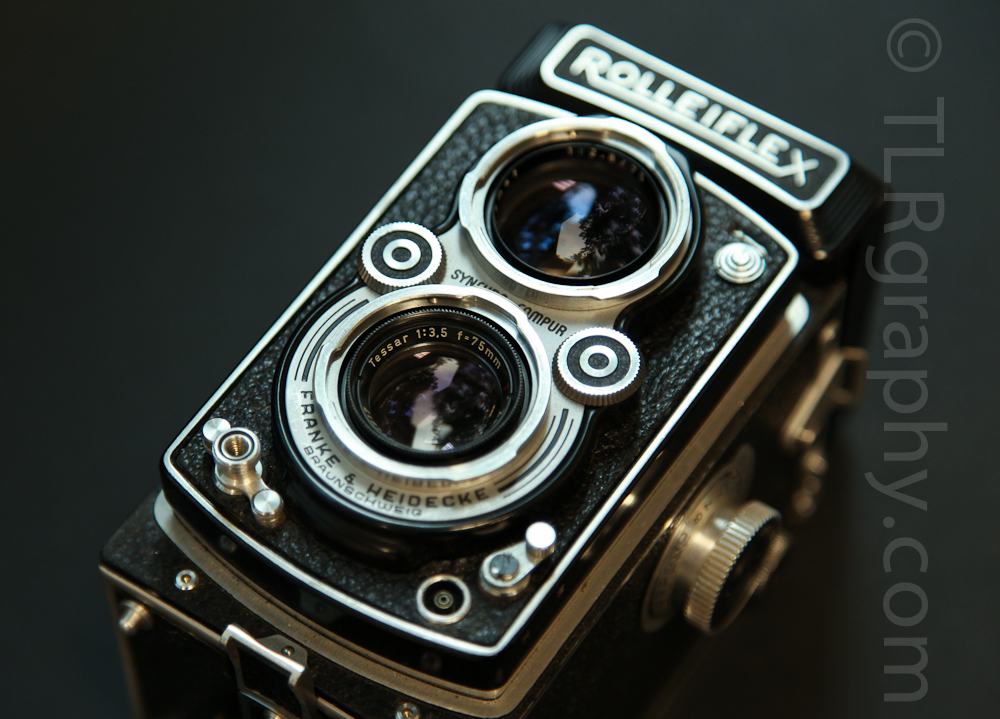
I have a set of Rolleiflex Automat K4A, produced in 1952. See some photos of this charming Rollei at the end of this post.
If you are looking for some sample photos of this camera, check out this set on Flickr

——————————————————————————————————
Rolleiflex is a series of medium format 120 roll film cameras manufactured by Franke & Heidecke, (now Rollei GmbH), in Germany.
The Square idea that changed photographic History Without any doubt was the introduction in 1929, of the first Rolleiflex Twin Lens Reflex ( TLR ), a sensation: an as ingenious as simple principle that quickly made the Rolleiflex THE must have professional camera all over the world. Producing high quality 6×6 cm square negatives in a compact very easy to operate camera, with the best lens available. Ther was no photographer who would not master one, no apprentice who would not wish to own one. For the professional, the Rolleiflex was like a gift from heaven, it meant a radical change in his/her creative work. Being able to work fast with a large size negative, light weight and superior quality made the choice as simple as important. There was no newspaper, no magazine, no photographic book that would not have some Rolleiflex photos in their publications. For decades, Rolleiflex cameras would have a decisive effect on photographic history. Many world-famous images originated from that small piece of fine mechanical art made bij the factory from Franke and Heidecke in Braunschweig, Germany. It was the beginning of a technical evolution that would be imitated by many other manufacturers around the Globe with sometimes successful but often poor copies of the bench-mark Rolleiflex. Franke & Heidecke are proof of being the master in that field , with the nowadays massive switch-over to digital, the traditional Rolleiflex TLR is still in production AND development. Very few companies in the world can boast such a long record with one basic design which has been improved on a regular basis yet still so closely resembles the original invention. from Rolleiclub
The Rolleiflex Automat Series
Rolleiflex Automat (X sync.) is a medium format TLR film camera manufactured by Franke & Heidecke, Braunschweig, Germany, and produced between 1949-51.
Automat (X sync.) is also known as Model K4 / 50.[1] [2]
The main difference is added flash X sync. than Automat Model 3.
All Rolleiflex Automat series was produced between 1937-1956. Automat name stands to introduced automatic film counter in 1937; this counter senses the thickness of the film backing to accurately begin counting frames, obviating the need for the ruby window that forced the photographer to read the frame number off the back of the film itself. Rolleiflex TLR film cameras were most famous and the standard of news and studio photographers for decads. Many photographers still shoot with Rolleiflex TLR film cameras and black-and-white film.
Specifications
- Serials: 1.100.000 – 1.168.000
- Film: 120 roll film, picture size 6x6cm & 35mm with Rolleikin I adapter set
- Taking lenses: All with filter Bayonet I
- Zeiss Tessar 75mm f/3.5
- Zeiss Oberkochen Opton 3,5/75
- Schneider Xenar 3,5/75
- Finder lens: Heidoscop Anastigmat 75mm f/2.8 filter Bayonet I
- Waist level finder with sports finder
- Shutter: Compur-Rapid 1-1/500 +T & B
- Standard X sync
- Self timer
- Winding: lever with auto stop, no red window, film pressure plate with black color coating
- Lever also cocks the shutter
- Double exposure prevention
- Backcover: hinged with exposure guide table, removable that can be exchanged for a dual film format back
- Weight: 965g
- The camera could be used with Rolleikin I to use 35mm film & with the special glass plate film adapter. Also useable after modifications: Rolleimarin I under water housing, Rolleimeter, Rolleiflash, Rolleikin 2 with dual format back.
- The following parts of this model can be modernized: larger focusing knob & release safety lock.
Automat (MX-EVS) Model K4B
- Produced between 1954-56
- Serials: 1.428.001-1.739.999
- Main differences than Automat (MX) Model K4A:
- Shutter: [Synchro-Compur]] LVS (Light Value System)
- From serial 1.464.000 the EV coupling can be disengaged by pressing a button in the aperture wheel
- From serial 1.700.000 with a switch in the aperture wheel.
Automat (MX) Model K4A
- Produced between 1951-54
- Serials: 1.200.001 – 1.474.999
- Main differences than Automat (X sync.) Model K4/50:
- Added M and X flash sync.
- Shutter: Synchro-Compur
- From serial 1.268.000 the camera accepts hand grip and quick mount plate
The photos below are the actual photos of my Rolleiflex Automat K4A, made in Germany in 1952.


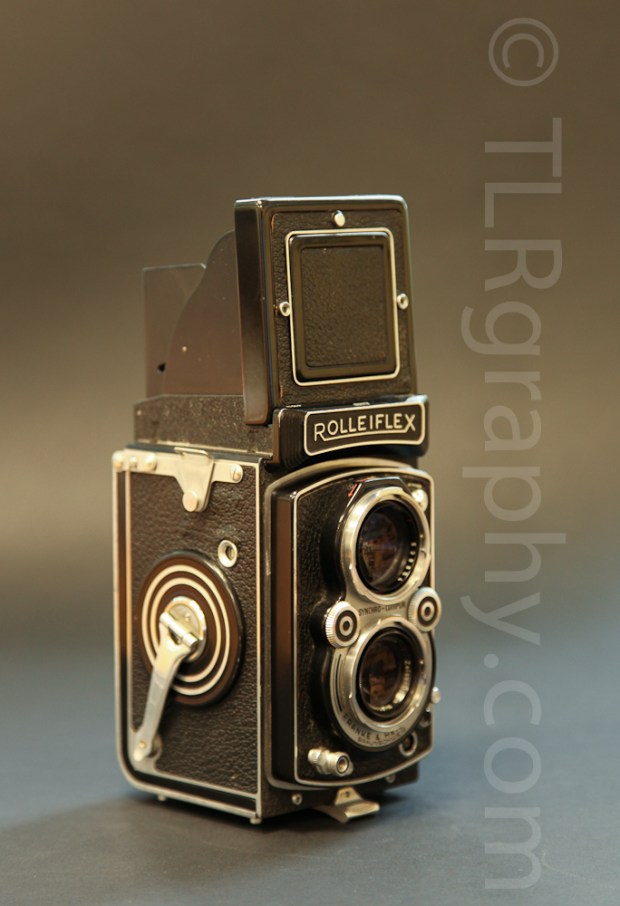
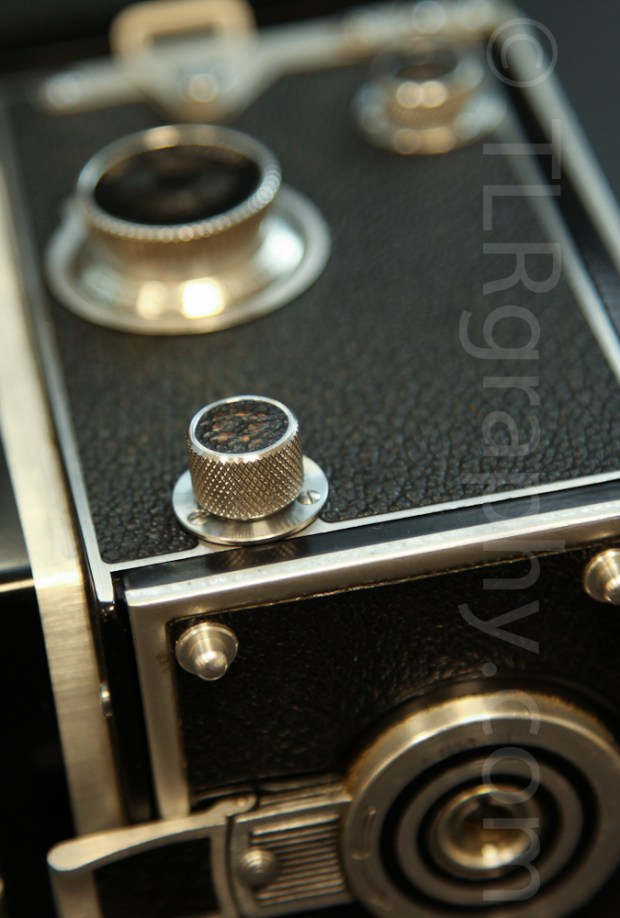

thanks for viewing
let me know if you are interested in getting this camera
tlrgraphy AT gmail DOT com
Price: SGD 525.00


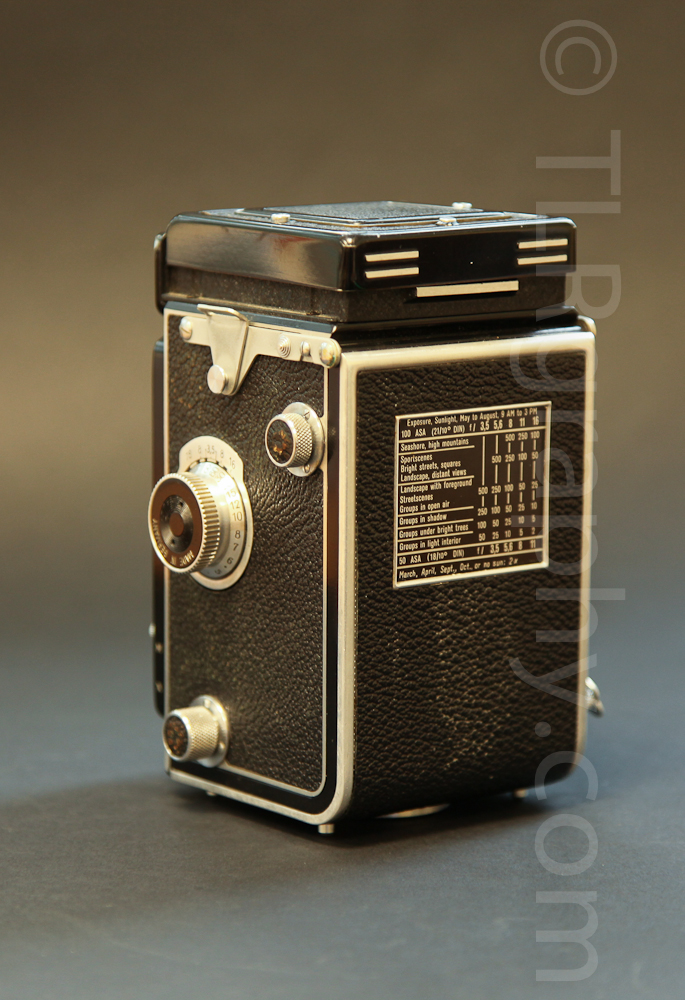


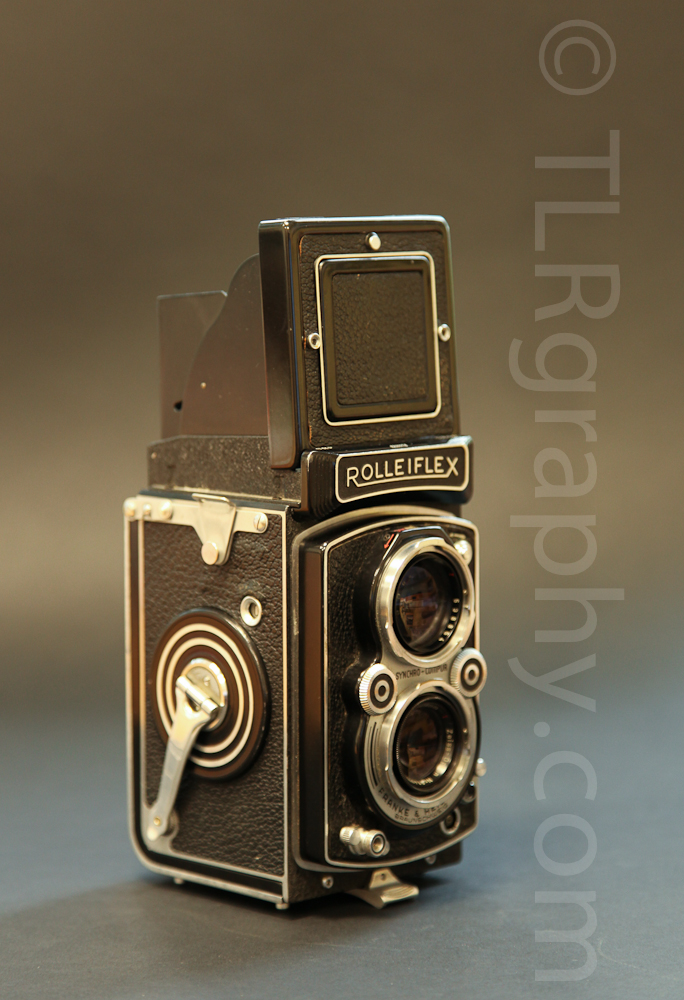

Yashica TLR VS Rollei TLR
perhaps this is the comparison between the most famous (or expensive) TLR and the most economical TLR. Or a comparison between TLRs made in Germany and Japan.
BTW, both are my fav. like them much better than the other few brands.
the below article is a shared opinion by “The Frugal Photographer”
The first post-war Japanese TLRs in general were not up to Rollei standards in any way. Some were junk. The Yashima company’s TLR factory produced the Pigeonflex/Yashimaflex/Yashicaflex line, decent but unexceptional goods, from about 1951 until the company transformed itself in 1955 by purchasing the Nicca company, at which time it renamed itself Yashica. They subsequently produced some very high quality TLR cameras, from 1957 until about 1984.
Between about 1957 and the early 1980’s, I would cheerfully rate the Yashica TLRs as better than the Rollei products with which they were meant to compete — the Rolleicords, and the Tessar and Xenar equipped f3.5 Rolleiflexes. The better, later, much more expensive Rolleiflexes are on a different plane. I don’t count the Yashica A, which was an entry-level, basic camera that didn’t pretend to compete with Rollei products.
The Yashica film wind mechanisms are not always as silky-smooth, but often they are, and even the worst are plenty smooth enough. They are robust enough for me, although the Rollei film wind gearing is stronger. The Yashica viewfinder screens incorporate fresnels and are substantially brighter and easier to use, and their lenses are of equal quality for all practical purposes (but not identical — Xenars have more “snap” to my eyes and Yashinons seem more subtle. Not everyone would agree).
The shutters are functionally equivalent, although I consider the Yashica’s Copal better designed than the Rollei’s Compur. The Copal has three speed range controllers, the Compur two, which has the practical consequence that the Copal will switch to 1/500 without effort, and you can switch to 1/500 when the shutter is cocked. Switching a Compur to 1/500 is remarkably difficult, and if you do so while the shutter is cocked you can ruin it. The Copal should stay more accurate longer — in theory.
The brighter viewscreen makes the Yashicas easier for me to handle, and earns them the “better than” rating. I would feel differently if it was 1960 and I was a busy pro who might easily wear out the Yashica film wind, or needed the Rolleiflex’s fast film reloading. But this is the 21st century, and neither I nor anyone reading this is likely to put film through a TLR by the mile, and none of us are using a TLR to shoot weddings. I’m nearsighted, and for me, moving from the comparable Rollei products to a Yashica-Mat at more or less the same price is definitely an upgrade.
The 124-G is usually overpriced and a Rolleicord or older Rolleiflex in good condition may be a better financial deal, e.g. $125 for a Rolleicord or decent Rollei Automat vs $200+ for a 124-G. In that case, don’t even think about the Yashica. Squint and bear it. Use the money you save to buy film.
Late 124-G’s (post-1980 approximately) sometimes had rough film winding mechanisms that fail prematurely. I have been told of late 124-G’s with no-name “Yashica” lenses instead of the high-quality Yashinon. However I have never seen one of these, and earlier specimens do not have these failings. The rough film-wind problems with the last of the 124-Gs are not widely acknowledged. I have been unable to pinpoint the region in the serial number range which marks the onset of problem cameras. In fact, I have no idea what the Yashica TLR serial number range is.
Non-124-G Yashicas are undervalued. The best of them is undoubtedly the plain-vanilla Yashica-Mat, a Rolleiflex clone without the film-thickness sensor, unmetered and usually available in excellent condition for much less money than a comparable Rollei TLR. It was manufactured continuously from 1957 to 1968 with the last models having f2.8 viewing lenses. Do not confuse the tough, attractive Yashica-Mat with the very early, flimsier Yashica-Flex.
There are selenium-celled versions of the Yashica-Mat, the Mat LM with LV readouts, and the Mat EM with direct f-stop/shutter speed readouts. Their selenium cells may work fine, but are now too old to be guaranteed reliable, and these metered models are worth owning, but not worth spending extra money for.
The Yashica-Mat 124 (just plain 124, non-G), an attractive, high-quality, CdS-metering machine, is equally as good. It will meter accurately if operated with a hearing-aid battery of the correct size. It was “improved” to make the 124-G, but the improvements are essentially trivial. The meter contacts of the G are gold plated. The G film chamber has improved anti-flare baffles. Nice, but not necessary.
If what you have is a ‘Mat, LM, EM, C, D, 635, 12, 24, 124, or 124-G, then use it. Don’t worry about trading “up” to a Rolleicord or f3.5 Tessar or Xenar Rolleiflex. You have nothing practical to gain, and the spiritual frisson some enthusiasts get from fondling Rollei gear doesn’t impress me. Knob wind film advance is just fine, not as sexy or as fast as lever wind and it doesn’t automatically cock the shutter, but it’s perfectly useful (and it lets you double-expose, if you’re into that).
If you have a YashicaFlex, or a Yashica A or E, then you should definitely trade up. You can do a lot better. The A is the one with that little red film number window on the back; the wretched E is a clone of the equally wretched Rolleimagic. Sell it on eBay, skip lunch for a week, and you’ll have enough to buy a Yashica D, Yashica-Mat, or Rolleicord.
If you have a Yashica B, Yashica Rookie, Pigeonflex, or a Yashimaflex, keep it — they’re decent if unexceptional performers — or sell it to a collector. They’re quite rare.
There is danger in generalizing about a line of cameras from handling one or two specimens. Here are my credentials:
My sample size in the years since about 1965 is probably on the order of a dozen Rollei and about 35 Yashica TLR cameras, of which I still own two Rolleis and 22 Yashicas (I’m collecting variations). I once regularly used a Rolleiflex Automat with Xenar (and an oddly attractive serial number, 107,0001), Rolleicord Va and Vb with Xenar, and various Yashica cameras with Yashikor and Yashinon lenses. I own but don’t use Yashica models A, B, and C, happily use my D, never shoot the screwball E, sometimes use the 635, 12, 24, 124, and 124-G, but prefer my late Yashica-Mat with f2.8 viewing lens.
I have owned, and tried to use, bad examples of Rollei products as well as bad examples of Yashica products. In my experience, neither marque has any monopoly on reliability except for the Rollei’s stronger film wind mechanism.
It needs to be said that the Minolta Autocord and Ricoh Diacord cameras are also fully the equal of the Rolleicord and f3.5 Xenar/Tessar Rolleiflexes, if not better, though they are less plentiful and not always less expensive. Abandoning one for a comparable Rollei would not be a step up. My sample size with these is three Autocords and two Diacords. They focus using lever mechanisms instead of knobs, which I could easily learn to prefer. The Diacord’s side-mounted focus levers in particular make it a lovely, wonderful to handle camera that makes the Rolleis and Yashicas seem awkward.
 TLRgraphy