Ikoflex as a classic camera
Photoethnography.com – Classic Cameras.
Overview and Personal Comments
The Zeiss Ikon Ikoflex is a twin-lens reflex camera made by the Zeiss Ikon conglomerate in the years immediately preceding and after WWII. The model I have is the Ikoflex II according McKeowns and has the Zeiss-Opton T coated Tessar 75mm / f3.5 taking lens. Using the text or images on this website without permission on an ebay auction or any other site is a violation of federal law.
Interesting quirks
Even though the lens is cocked separately from the film winding, the camera has double exposure prevention! This most probably has relegated a lot of units to the “broken” bin since people didn’t realize that you have to wind the film before cocking the shutter. Also, if the film counter has counted past ’12’ then you have to reset it back to ‘1’ before it lets you shoot again as well. Those darn Zeiss engineers, they were too smart for their own good. There are actually four shutter interlocks:
- Double exposure prevention: make sure the film is wound to the next position
- No film interlock: if the film counter is past ’12’ then the camera will not shoot. Load film and/or reset film counter to ‘1’
- Waist-level finder interlock: chimney finder has to be in the open position
- Shutter cocked interlock: OK, it’s not a real interlock and obviously the camera won’t shoot if the shutter isn’t cocked, but after winding the film it’s easy to forget
Looking at the web at other people’s cameras, McKeowns has a couple of mistakes in his 2001-2002 edition. First he doesn’t think the II came with both a Tessar and a Prontor (1-300) shutter in the same unit, he thinks that the Tessars only came with Compur (1 – 1/500) shutters. Also his photos are a bit odd. I hope he fixes this in the next edition.
Technical Details
|
Camera Name
|
Ikoflex |
|---|---|
|
Manufacturer
|
Zeiss Ikon |
|
Place of Manufacture
|
Germany / West Germany |
|
Date of Manufacture
|
1939-51 (mine is most probably post-War as it is T coated) |
|
Focusing System
|
Twin-lens reflex design Lens use bellows focusing Focusing range 3.6′ ~ infinity (focus lever on left side, infinity is forward) |
|
Focusing Lens
|
75mm, f/3.5, Carl Zeiss Teronar-Anastigmat |
|
Taking Lens
|
75mm, f/3.5, Zeiss-Opton Tessar T coated lens |
|
Shutter
|
Prontor (?) shutter 1 sec – 1/300 B setting X-flash sync at all speeds X – M switch for flash or timer (can’t do both!) |
|
Metering System
|
Hah! Handy printed exposure scale on the waist-level finder hood. |
|
Apertures
|
f/3.5 – f/16 (stepless) 10 aperture blades |
|
Flash
|
PC cable connection |
|
Film type / speeds
|
Type 120 film (medium format) |
|
Battery type
|
hah! |
|
Dimensions and weight
|
A brick |
| Use of this chart, text, or any photographs in an eBay auction without permission will result in an immediate IP violation claim with eBay VeRO. Violators may have their eBay account cancelled. | |
About Zeiss Ikon
Zeiss Ikon was formed in 1926 out of the merger of five companies: Carl Zeiss/Jena A.G., ICA A.G., Erneman A.G., Goerz A.G, and Contessa-Nettel A.G.
Zeiss-Ikon was a huge corporation with offices in five cities in Germany and it offered a huge variety of cameras. Unfortunately, that was also its downfall. Various divisions competed against each other horribly and there was much, much reduplication of effort. It never really took advantage of its size.
Carl Zeiss, the main company, can actually trace its roots to 1846, to the very dawn of photography and is renowned for such designs as the Tessar and T* coating. Even now, Carl Zeiss lenses grace the very best cameras from Contax to Hasselblad.
In 1972, Zeiss formed into a partnership with Yashica Corporation of Japan. Zeiss now only does lens design and makes a small amount of photographic lenses. Yashica manufactures the Contax series of Zeiss cameras.
Ikophot Exposure Meter – Made by Zeiss Ikon
Most of the TLRs do not come with built-in meter.
For TLRs come with built-in meter, most of these may not fully functional due the its age, or some functional but may not be accurate.
In these cases, a good exposure is very useful.
Managed to got a e-copy of Zeiss Ikon Ikophot exposure meter instructional manual, free download here.
Seriously… Rolleiflex, SGD 525.00
There is kind of saying that… if you are into medium format photography, you must have a Rolleiflex…
What is amazing about Rolleiflex?
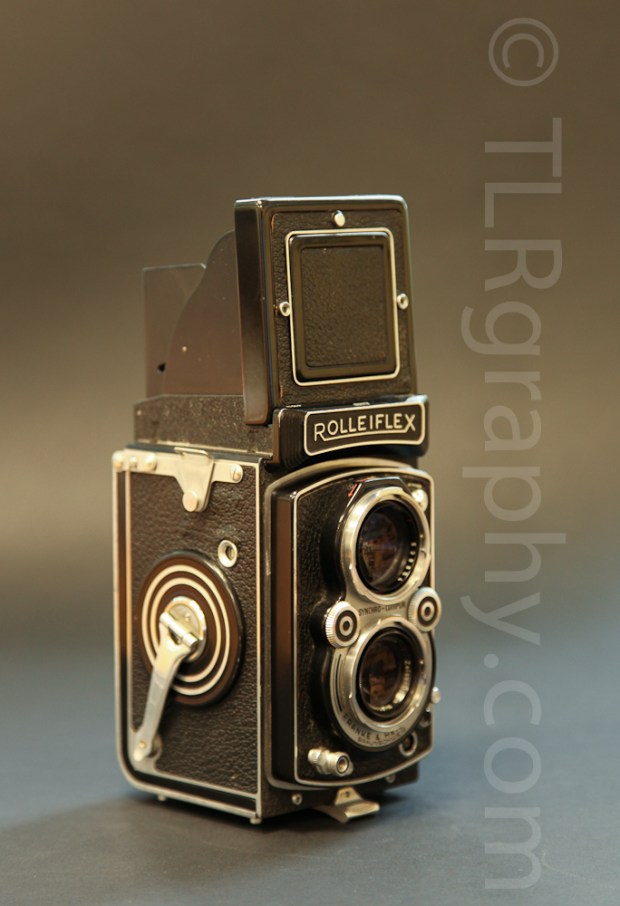
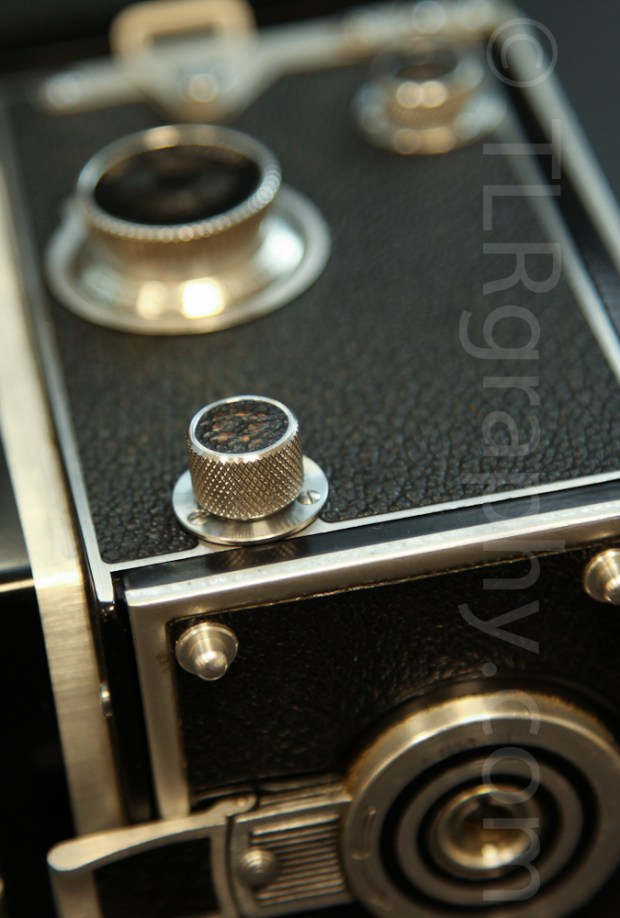
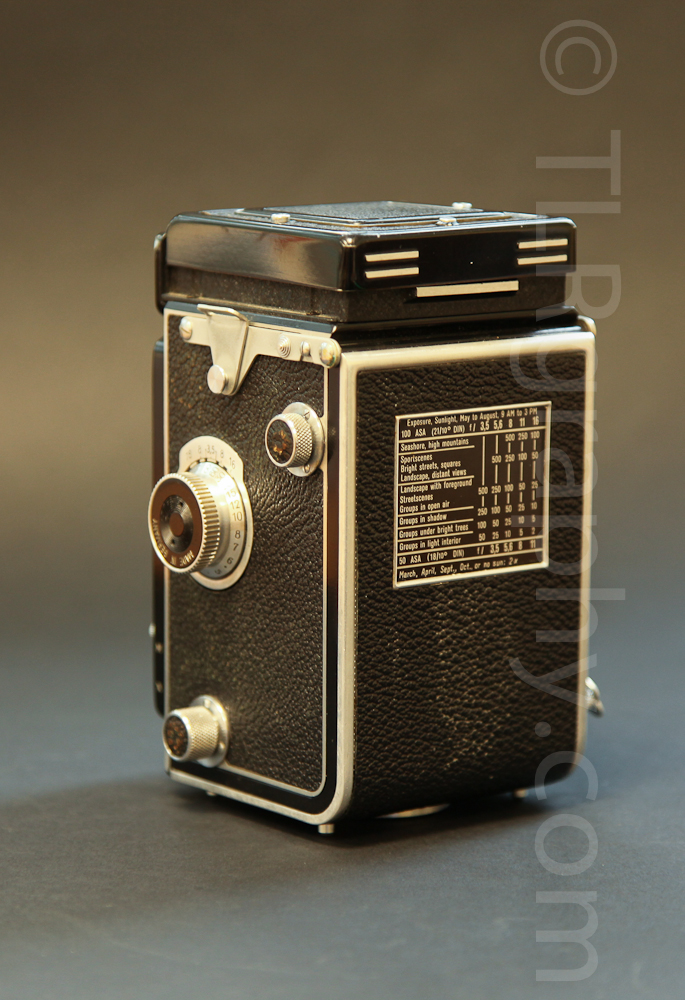
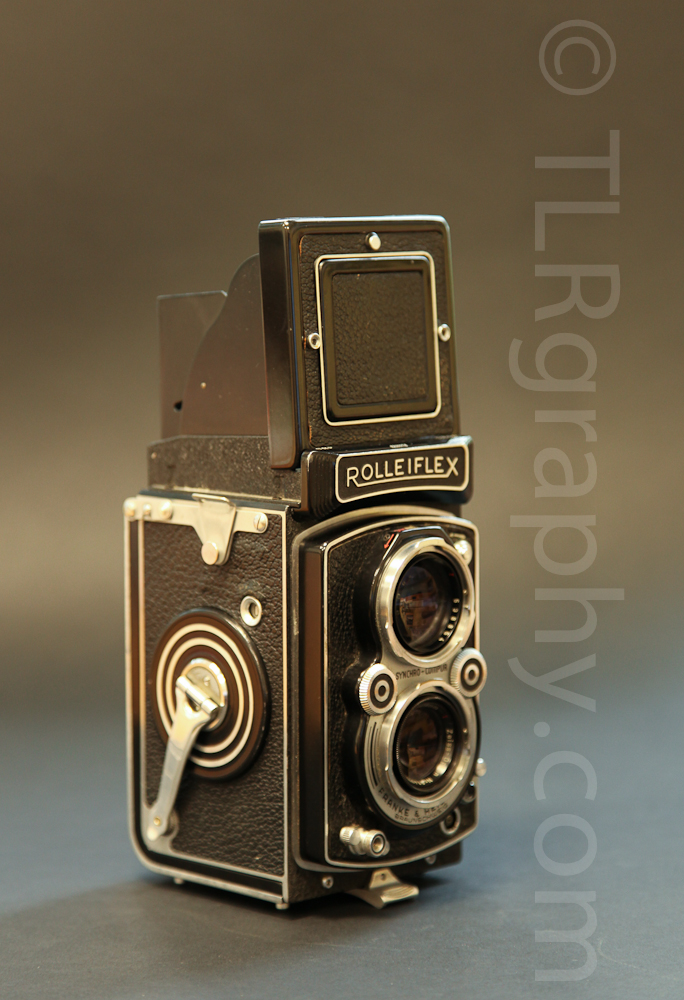
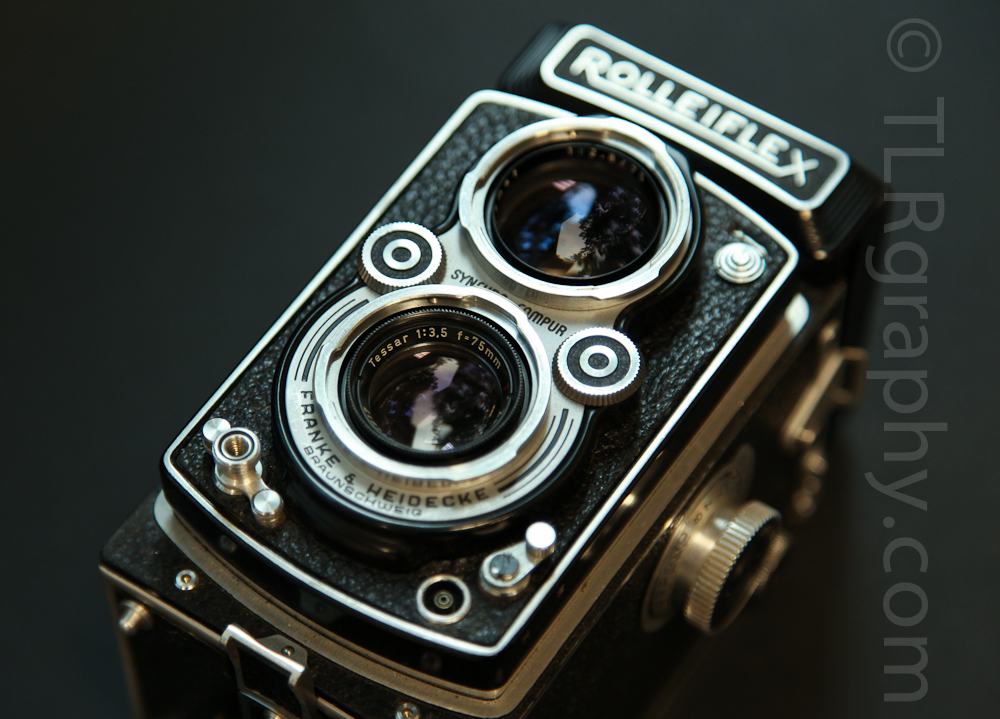
I have a set of Rolleiflex Automat K4A, produced in 1952. See some photos of this charming Rollei at the end of this post.
If you are looking for some sample photos of this camera, check out this set on Flickr

——————————————————————————————————
Rolleiflex is a series of medium format 120 roll film cameras manufactured by Franke & Heidecke, (now Rollei GmbH), in Germany.
The Square idea that changed photographic History Without any doubt was the introduction in 1929, of the first Rolleiflex Twin Lens Reflex ( TLR ), a sensation: an as ingenious as simple principle that quickly made the Rolleiflex THE must have professional camera all over the world. Producing high quality 6×6 cm square negatives in a compact very easy to operate camera, with the best lens available. Ther was no photographer who would not master one, no apprentice who would not wish to own one. For the professional, the Rolleiflex was like a gift from heaven, it meant a radical change in his/her creative work. Being able to work fast with a large size negative, light weight and superior quality made the choice as simple as important. There was no newspaper, no magazine, no photographic book that would not have some Rolleiflex photos in their publications. For decades, Rolleiflex cameras would have a decisive effect on photographic history. Many world-famous images originated from that small piece of fine mechanical art made bij the factory from Franke and Heidecke in Braunschweig, Germany. It was the beginning of a technical evolution that would be imitated by many other manufacturers around the Globe with sometimes successful but often poor copies of the bench-mark Rolleiflex. Franke & Heidecke are proof of being the master in that field , with the nowadays massive switch-over to digital, the traditional Rolleiflex TLR is still in production AND development. Very few companies in the world can boast such a long record with one basic design which has been improved on a regular basis yet still so closely resembles the original invention. from Rolleiclub
The Rolleiflex Automat Series
Rolleiflex Automat (X sync.) is a medium format TLR film camera manufactured by Franke & Heidecke, Braunschweig, Germany, and produced between 1949-51.
Automat (X sync.) is also known as Model K4 / 50.[1] [2]
The main difference is added flash X sync. than Automat Model 3.
All Rolleiflex Automat series was produced between 1937-1956. Automat name stands to introduced automatic film counter in 1937; this counter senses the thickness of the film backing to accurately begin counting frames, obviating the need for the ruby window that forced the photographer to read the frame number off the back of the film itself. Rolleiflex TLR film cameras were most famous and the standard of news and studio photographers for decads. Many photographers still shoot with Rolleiflex TLR film cameras and black-and-white film.
Specifications
- Serials: 1.100.000 – 1.168.000
- Film: 120 roll film, picture size 6x6cm & 35mm with Rolleikin I adapter set
- Taking lenses: All with filter Bayonet I
- Zeiss Tessar 75mm f/3.5
- Zeiss Oberkochen Opton 3,5/75
- Schneider Xenar 3,5/75
- Finder lens: Heidoscop Anastigmat 75mm f/2.8 filter Bayonet I
- Waist level finder with sports finder
- Shutter: Compur-Rapid 1-1/500 +T & B
- Standard X sync
- Self timer
- Winding: lever with auto stop, no red window, film pressure plate with black color coating
- Lever also cocks the shutter
- Double exposure prevention
- Backcover: hinged with exposure guide table, removable that can be exchanged for a dual film format back
- Weight: 965g
- The camera could be used with Rolleikin I to use 35mm film & with the special glass plate film adapter. Also useable after modifications: Rolleimarin I under water housing, Rolleimeter, Rolleiflash, Rolleikin 2 with dual format back.
- The following parts of this model can be modernized: larger focusing knob & release safety lock.
Automat (MX-EVS) Model K4B
- Produced between 1954-56
- Serials: 1.428.001-1.739.999
- Main differences than Automat (MX) Model K4A:
- Shutter: [Synchro-Compur]] LVS (Light Value System)
- From serial 1.464.000 the EV coupling can be disengaged by pressing a button in the aperture wheel
- From serial 1.700.000 with a switch in the aperture wheel.
Automat (MX) Model K4A
- Produced between 1951-54
- Serials: 1.200.001 – 1.474.999
- Main differences than Automat (X sync.) Model K4/50:
- Added M and X flash sync.
- Shutter: Synchro-Compur
- From serial 1.268.000 the camera accepts hand grip and quick mount plate
The photos below are the actual photos of my Rolleiflex Automat K4A, made in Germany in 1952.



thanks for viewing
let me know if you are interested in getting this camera
tlrgraphy AT gmail DOT com
Price: SGD 525.00





 TLRgraphy