Rolleiflex 2.8F Review
Source:Photography Matters
 Imagine if you had to choose just one camera and lens for all your photography for the rest of your life. You can make it whatever you want but there’s no going back. Film or digital? 35mm or medium format? Large format? You can make a case for lots of different cameras depending on the type of work you want to do with them.
 I say “was” because I haven’t put a roll of film through it for years. And the bad news is that it has now started to develop a little fungus between the elements of its fabulous 80mm Planar lens. Of course, it’s that superb glass that is the heart of the Rolleiflex and that’s why I’m thinking about sending it away to be CLA’d. The focusing screen is also a little dim now having picked up some scratches over the years.
Dim and Distant

 It was round about that time, say six months ago, when I noticed that the glass wasn’t looking quite as pristine as it used to. The camera’s in pretty good condition considering it’s about 46 years old – just a couple of years younger than I am – but it’s always suffered from sticky slow speeds. Normally the one and half second setting will fire OK but sometimes the shutter sticks wide open. That’s something else that the CLA should cure.
 OK, so I’d be restricted to just one lens instead of choosing a camera with a zoom but the 80mm focal length equates to something like a 35mm lens on the 35mm format if printed square and a 43mm lens if printed onto 8×10″ paper and is much more versatile than you’d think. The vast majority of photographs during the film era were taken somewhere in the 40-50mm range although I’d imagine that would no longer be the case for digital cameras most of which are equipped with wide-range zooms. A focal length of 40mm or so is my favourite anyway so the Rollei is ideal for my particular view of the world.
 Nowadays, I’ll come back from a photography trip with hundreds and hundreds of images, many of which are duplicates of the same scene as I tried different views and adjusted exposure, etc. With 35mm this tendency was nowhere near as acute but out of 36 explosures it was uncommon for there to be more than about eight that you could say were different in the sense of being completely separate photographs rather than variations on a theme. With the 12 shots available on the Rollei (24 if you used 220 film), you had to make every one count. Under that sort of pressure I definitely took far more care and gave the scene much more thought.
 Then there’s the square format. If you’ve only ever seen the world as a rectangle, you tend to think that it will be difficult composing within a 6x6cm square. But you’d be wrong. It didn’t seem to matter whether it was a landscape, a portrait, a street shot, or whatever, the square format is just a powerful way of representing a three dimensional world in two dimensions. It’s especially good for street work or, strange as it might seem, as a walkabout camera. It doesn’t appear to intimidate people the way a big DSLR like the D700 can and the fact that you’re looking down into the hood lends the process of photographing someone an air of detachment. It’s just less confrontational.
Looking at some of the pics on this post, I can see that my Rollei might need a bit of a renovation on top of a CLA. It’s missing some leather from the front panel from the time a few months ago when I decided to take the front off to see if I could get at the fungus. That’ll need to be replaced. Then there’s a lump under the leather on the winder side of the camera where there’s some corrosion on one of the screw heads. Maybe it’s time to strip all the leather off, clean everything up and give it a new set of clothes courtesy of cameraleather.com. They do a leather kit that is virtually identical to the original but I quite fancy the British Racing Green calfskin. Nice!
That’s the Rolleiflex 2.8F, then. A versatile, reliable, beautifully made camera that’s capable of the highest quality photographs. A little TLC and my Rollei will be fit enough to take outside again with a few rolls of XP2 for company.
Seriously… Rolleiflex, SGD 525.00
There is kind of saying that… if you are into medium format photography, you must have a Rolleiflex…
What is amazing about Rolleiflex?
I have a set of Rolleiflex Automat K4A, produced in 1952. See some photos of this charming Rollei at the end of this post.
If you are looking for some sample photos of this camera, check out this set on Flickr

——————————————————————————————————
Rolleiflex is a series of medium format 120 roll film cameras manufactured by Franke & Heidecke, (now Rollei GmbH), in Germany.
The Square idea that changed photographic History Without any doubt was the introduction in 1929, of the first Rolleiflex Twin Lens Reflex ( TLR ), a sensation: an as ingenious as simple principle that quickly made the Rolleiflex THE must have professional camera all over the world. Producing high quality 6×6 cm square negatives in a compact very easy to operate camera, with the best lens available. Ther was no photographer who would not master one, no apprentice who would not wish to own one. For the professional, the Rolleiflex was like a gift from heaven, it meant a radical change in his/her creative work. Being able to work fast with a large size negative, light weight and superior quality made the choice as simple as important. There was no newspaper, no magazine, no photographic book that would not have some Rolleiflex photos in their publications. For decades, Rolleiflex cameras would have a decisive effect on photographic history. Many world-famous images originated from that small piece of fine mechanical art made bij the factory from Franke and Heidecke in Braunschweig, Germany. It was the beginning of a technical evolution that would be imitated by many other manufacturers around the Globe with sometimes successful but often poor copies of the bench-mark Rolleiflex. Franke & Heidecke are proof of being the master in that field , with the nowadays massive switch-over to digital, the traditional Rolleiflex TLR is still in production AND development. Very few companies in the world can boast such a long record with one basic design which has been improved on a regular basis yet still so closely resembles the original invention. from Rolleiclub
The Rolleiflex Automat Series
Rolleiflex Automat (X sync.) is a medium format TLR film camera manufactured by Franke & Heidecke, Braunschweig, Germany, and produced between 1949-51.
Automat (X sync.) is also known as Model K4 / 50.[1] [2]
The main difference is added flash X sync. than Automat Model 3.
All Rolleiflex Automat series was produced between 1937-1956. Automat name stands to introduced automatic film counter in 1937; this counter senses the thickness of the film backing to accurately begin counting frames, obviating the need for the ruby window that forced the photographer to read the frame number off the back of the film itself. Rolleiflex TLR film cameras were most famous and the standard of news and studio photographers for decads. Many photographers still shoot with Rolleiflex TLR film cameras and black-and-white film.
Specifications
- Serials: 1.100.000 – 1.168.000
- Film: 120 roll film, picture size 6x6cm & 35mm with Rolleikin I adapter set
- Taking lenses: All with filter Bayonet I
- Zeiss Tessar 75mm f/3.5
- Zeiss Oberkochen Opton 3,5/75
- Schneider Xenar 3,5/75
- Finder lens: Heidoscop Anastigmat 75mm f/2.8 filter Bayonet I
- Waist level finder with sports finder
- Shutter: Compur-Rapid 1-1/500 +T & B
- Standard X sync
- Self timer
- Winding: lever with auto stop, no red window, film pressure plate with black color coating
- Lever also cocks the shutter
- Double exposure prevention
- Backcover: hinged with exposure guide table, removable that can be exchanged for a dual film format back
- Weight: 965g
- The camera could be used with Rolleikin I to use 35mm film & with the special glass plate film adapter. Also useable after modifications: Rolleimarin I under water housing, Rolleimeter, Rolleiflash, Rolleikin 2 with dual format back.
- The following parts of this model can be modernized: larger focusing knob & release safety lock.
Automat (MX-EVS) Model K4B
- Produced between 1954-56
- Serials: 1.428.001-1.739.999
- Main differences than Automat (MX) Model K4A:
- Shutter: [Synchro-Compur]] LVS (Light Value System)
- From serial 1.464.000 the EV coupling can be disengaged by pressing a button in the aperture wheel
- From serial 1.700.000 with a switch in the aperture wheel.
Automat (MX) Model K4A
- Produced between 1951-54
- Serials: 1.200.001 – 1.474.999
- Main differences than Automat (X sync.) Model K4/50:
- Added M and X flash sync.
- Shutter: Synchro-Compur
- From serial 1.268.000 the camera accepts hand grip and quick mount plate
The photos below are the actual photos of my Rolleiflex Automat K4A, made in Germany in 1952.


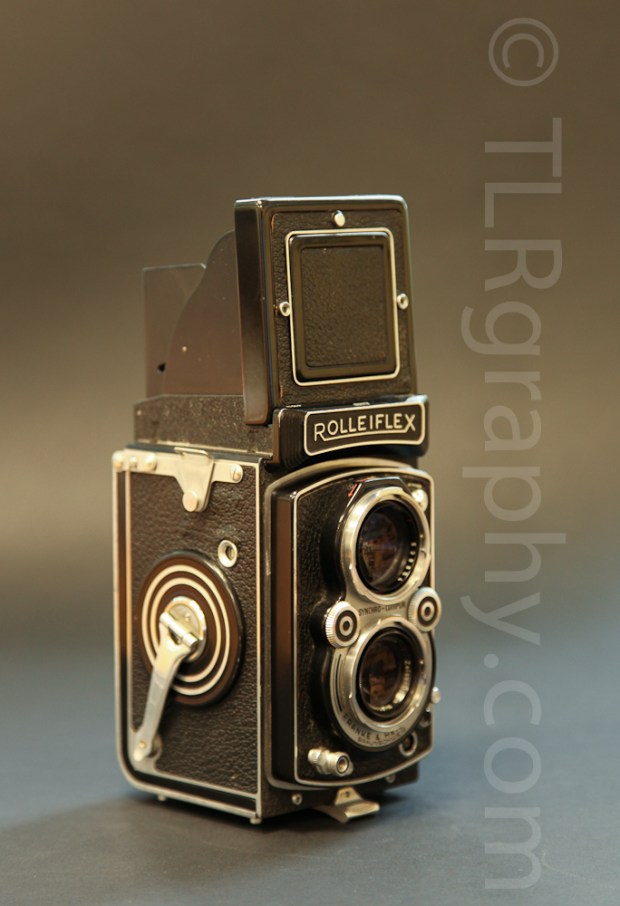
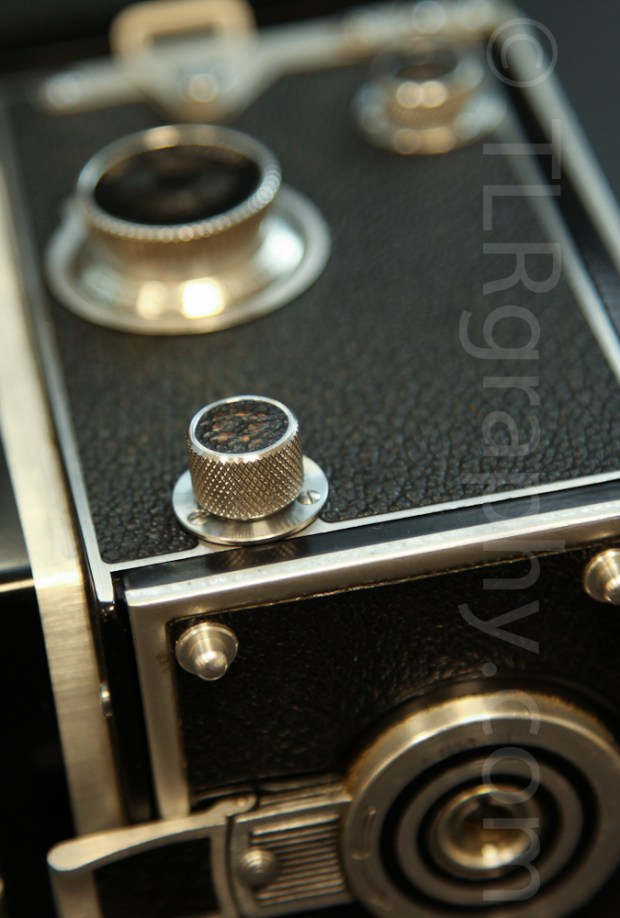

thanks for viewing
let me know if you are interested in getting this camera
tlrgraphy AT gmail DOT com
Price: SGD 525.00


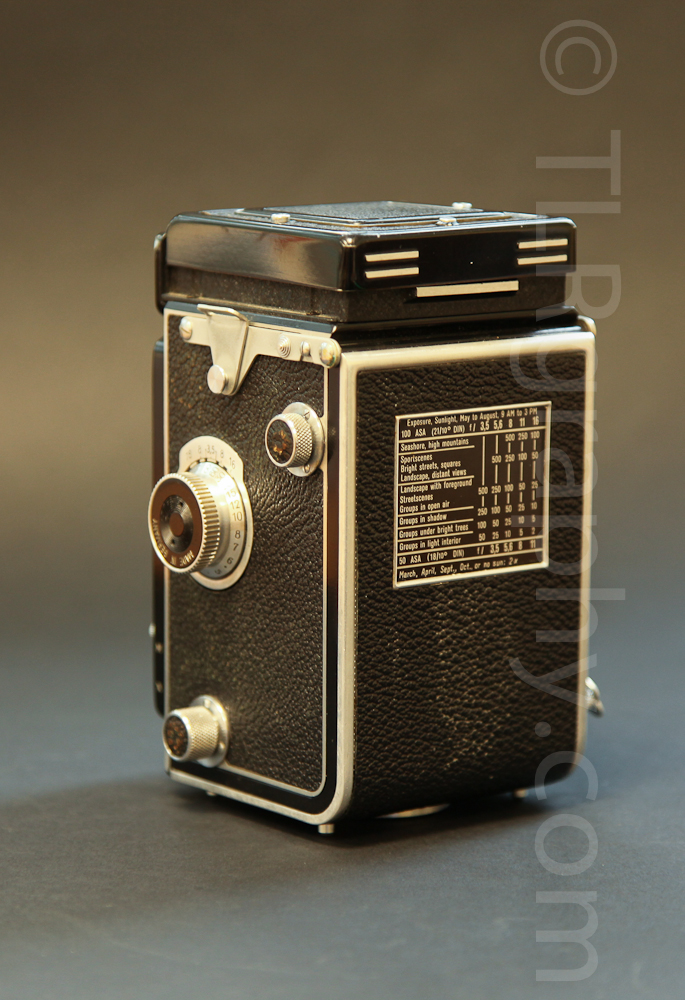


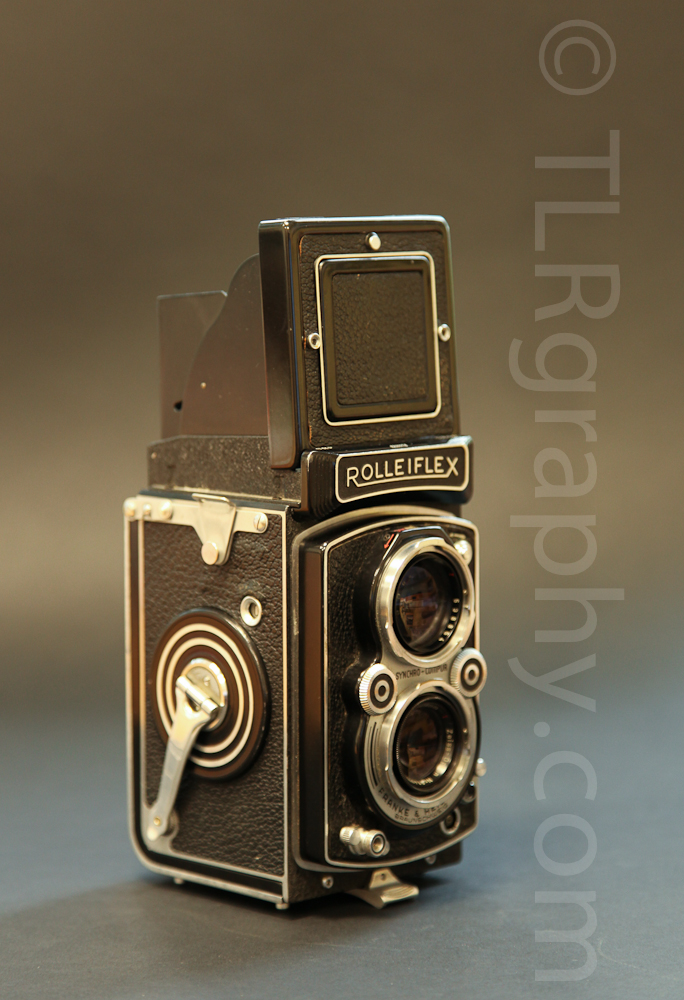

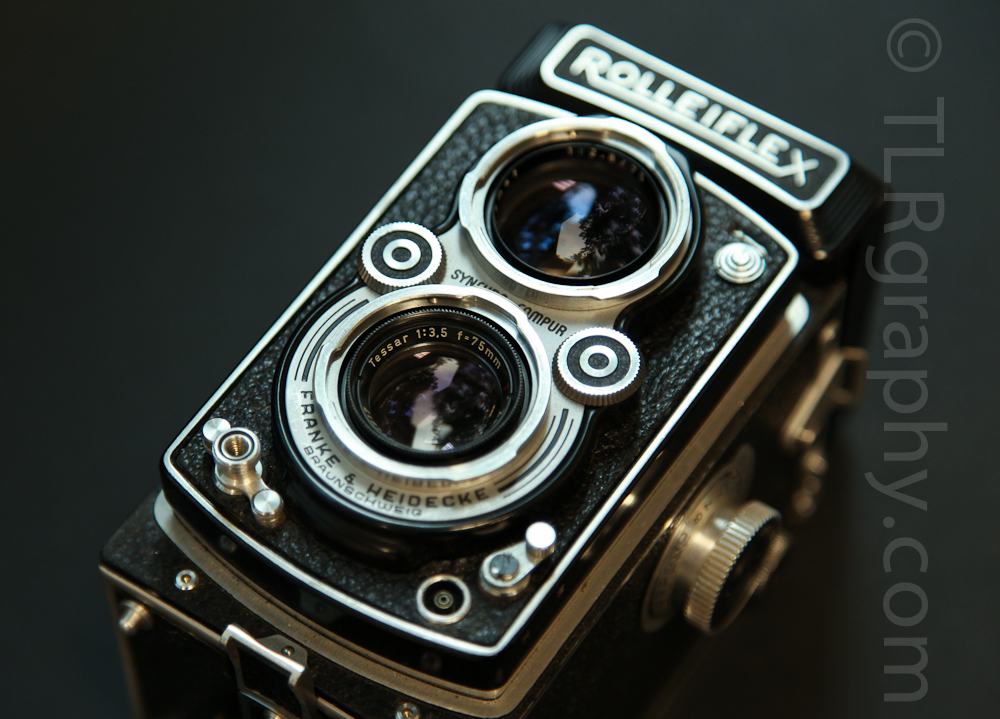
1954 Rolleiflex Automat MX (Model K4A)
Happen to see Photographer Dave Carroll’s Rolleiflex K4A TLR through a random search.
What a Beauty!
If you have noticed, the rolleiflex label has different font types on different models. This K4A appears to be also quite different in Label design.
1954 Rolleiflex Automat MX (Model K4A) » DJCPHOTO.COM.
[I have two of these beauties in my collection 🙂 ]
 TLRgraphy