Contaflex TLR – A legendary

In 1935, Zeiss Ikon brought forth the most advanced – and one of the heaviest cameras – of the day: the Contaflex (860/24) twin-lens reflex that used 35mm film. Camera has been produced only to 1943. The camera boasted the first built-in selenium light meter. The Contaflex featured interchangeable lenses, a focal plane shutter and a van Albada sports viewfinder. The lenses were the same as those offered for the Contax II but in a Contaflex mount. This heavy camera was considered to be one of the greatest German engineer’s cameras ever built. Contaflex had the first built-in selenium light meter, the first chrome finish and the first interchangeable lenses on a TLR. The viewing screen accommodates views for a range of lenses with concentric frames for them plus a very useful pop-up magnifier. The focusing screen is 2x the size of a 35mm neg and gives parallax correction for the 50mm standard lenses. The viewing lens is an 80mm or 8cm f2.8, which showed the same angle of view as the 50mm or 5cm f1.5 lens, but on a larger viewing screen and with shallower depth of field. The camera had interchangeable lenses with framelines in the finder for them all (except the wide angles) which required an auxiliary finder. The shutter is similar to the that used in the prewar Contax cameras, a vertically traveling focal plane shutter made of metal slats. It is heavy, 1.5kg, about twice as much as the Contax I. The lenses are also larger and heavier than their Contax counterparts, and are difficult to mount. The view through the finder isn’t bright by today’s standards, although it’s not too bad when compared to some of the tiny viewfinders of the day. The magnifier is a necessity if you plan on focusing. Between the waist level viewing, with it’s reversed image, and the need for a magnifier, the only way you can photograph anything moving is with the Albanda finder. But in doing that, you’ve just turned your overly expensive and heavy camera into a viewfinder camera. And if you think photographing action is bad, try taking a picture in portrait format (as opposed to landscape). You must hold the camera on it’s side at eyelevel, parallel to the subject. Now, instead of everything being backwards, it is upside down! And the controls are in the most inconvenient places. This is a camera that sold in 1939 for $250 with the 50/2.8 Tessar, and $372 with the 1.5 Sonnar. With the 50/1.5, it was the tied for being the most expensive still camera in their catalog with the Contax III with it’s 50/1.5. A range of accessories were offered for it, which are rarely seen today. They included a special lens shade which clips to the body, a cut film adapter back, a microscope adapter and an special arm for the copy stand.
A Review from pacific rim camera

Contaflex TLR, shown with 50/1.5 Sonnar This is one of the most impressive cameras ever built. Introduced in 1935, it was the first camera to have a built in exposure meter, and the first available in chrome finish. This was the flagship camera of the Zeiss line at one of their proudest moments. The viewing lens is an 80/2.8, which showed the same angle of view as the 50mm normal, but on a larger viewing screen, and with shallower depth of field. The camera had interchangeable lenses, with framelines in the finder for them all, except the wide angles, which required an auxiliary finder. The shutter is similar to the shutter used in the prewar Contax cameras, a vertically traveling focal plane shutter made of metal slats.
This is a perfect example of how the German photo industry was often driven by engineers. They conceived the camera as a feat of engineering. Many of the solutions are ingenious, and the camera is truly a marvel to behold. But as a instrument for making photographs, it is miserable. It is heavy, weighing 3-1/4 lbs (1.5kg), about twice as much as the Contax I. The lenses are also larger and heavier than their Contax counterparts, and are difficult to mount.
The view through the finder isn’t bright by today’s standards, although it’s not too bad when compared to some of the tiny viewfinders of the day. The magnifier is a necessity if you plan on focusing. Between the waist level viewing, with it’s reversed image, and the need for a magnifier, the only way you can photograph anything moving is with the Albanda finder. But in doing that, you’ve just turned your overly expensive and heavy camera into a viewfinder camera. And if you think photographing action is bad, try taking a picture in portrait format (as opposed to landscape). You must hold the camera on it’s side at eyelevel, parallel to the subject. Now, instead of everything being backwards, it is upside down! And the controls are in the most inconvenient places.
This is a camera that sold in 1939 for $250 with the 50/2.8 Tessar, and $372 with the 1.5 Sonnar. With the 50/1.5, it was the tied for being the most expensive still camera in their catalog with the Contax III with it’s 50/1.5. A range of accessories were offered for it, which are rarely seen today. They included a special lens shade which clips to the body, a cut film adapter back, a microscope adapter and an special arm for the copy stand.
Contaflex TLR Lenses
35/4.5 Orthometer
35/2.8 Biogon
50/2.8 Tessar
50/2 Sonnar
50/1.5 Sonnar
85/4 Triotar
85/2 Sonnar
135/4 Sonnar

The frame lines in the finder.

A look at the lens mount. The notch connects the lens to the focus on the camera.

Four of the lenses, the 35/2.8 Biogon, the 85/2 Sonnar, the 50/1.5 Sonnar and the 50/2 Sonnar.

The 35/2.8 Biogon mounted on the camera.

The 85/2 Sonnar mounted.

The 135/4 Sonnar mounted.

The 135/4 Sonnar.

The eveready case for the Contaflex.

The front cap.

The cut film adapter back, with holder and ground glass focus screen.

The camera apart, in case you were thinking of taking one apart to see what is inside.

The camera apart, from the back showing the shutter. The curtain straps are broken on this camera
Zeiss Ikon Ikoflex Twin Lens Reflex Cameras
850/16 Ikoflex 1934-37 f6.3 or 4.5/80 Novar Compur-Rapid,Klio, Derval “coffee can” model, lever focus 1936, knob focus after 1936
850/16 Ikoflex 1 1939-51 f3.5/75 Tessar Compur, Klio,Prontor S same as Ikoflex II from 1937-39 (851/16)
851/16 Ikoflex II 1936-39 f3.8 CZJ Triotar or f3.5/75 Tessar Compur-Rapid lever focus in 1937, knob focus after ’37, continued as Ikoflex I (850/16) after 1939
851/16 Ikoflex II 1939-51 f3.5/70 Novar or f3.5/75 Tessar Prontor similar to Ikoflex II of 1937-39
854/16 Ikoflex Ia 1952-56 f3.5/70 Novar or f3.5/70 Tessar Prontor shutter release located on top next to viewfinder
856/16 Ikoflex Ib 1956-58 f3.5/75 Novar or f3.5/75 Tessar Prontor improved version of 1a, shutter release located on side next to taking lens
856/16 1956-60 f3.5/75 Novar or f3.5/75 Tessar Prontor metered version of 1b
852/16 Ikoflex II/III 1950-52 f3.5/75 Tessar or f3.5/75 Triotar Compur-Rapid or Compur new style Ikoflex II after 1939
855/16 Ikoflex IIa 1950-52 f3.5/75 Tessar Compur-Rapid early version with peep window on each side of taking lens. film advance does not automatically cock shutter.
855/16 Ikoflex IIa 1953-56 f3.5/75 Tessar Compur-Rapid restyled version with peep windows directly over viewing lens. film advance automatically cocks shutter
853/16 Ikoflex III 1939-40 f2.8/80 Tessar Compur-Rapid Albada finder
887/16 Ikoflex Favorit 1957-60 f3.5/75 Tessar Synchro-Compur LVS light meter, last Ikoflex
* Filters and Lens Shades: The Ikoflex Cameras, with the exception of the “coffee can” use 35.5mm screw in or 37mm push on filters and/or adapter rings over the taking lens. The viewing lens takes either a Zeiss S27 (27mm screw in) or 28.5mm push on filter. Original Zeiss Filters and shades are extremely hard to find these days.
Seriously… Rolleiflex, SGD 525.00
There is kind of saying that… if you are into medium format photography, you must have a Rolleiflex…
What is amazing about Rolleiflex?
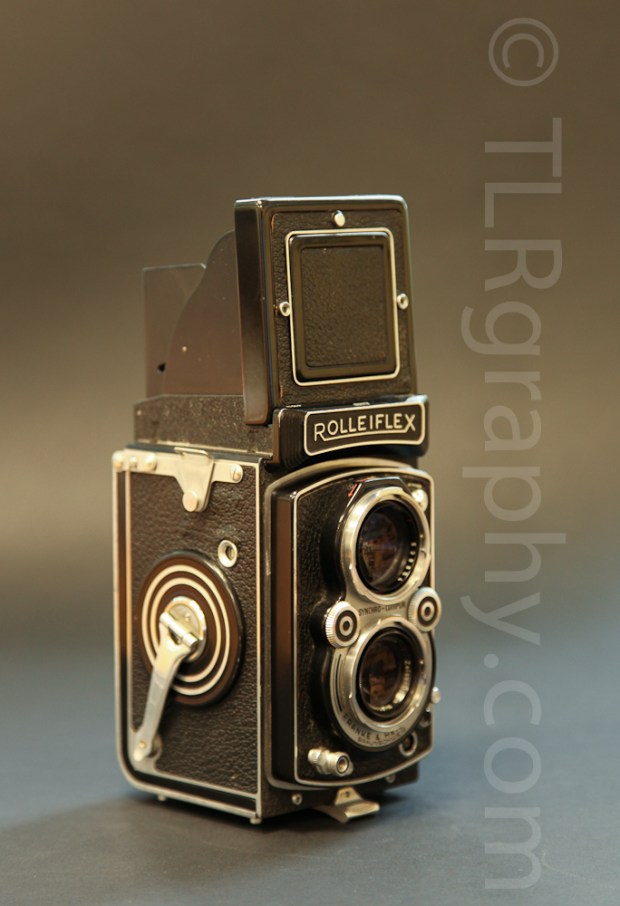
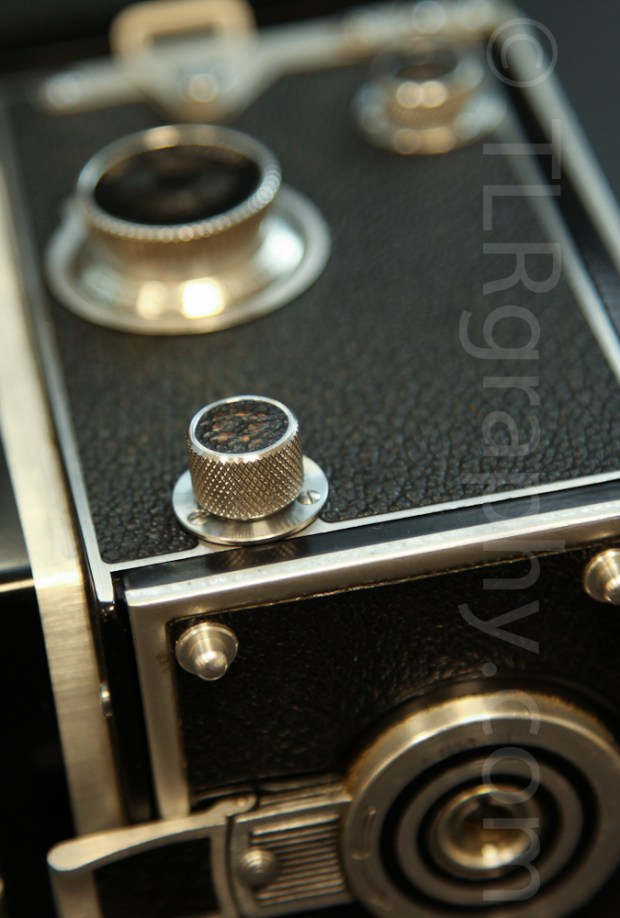
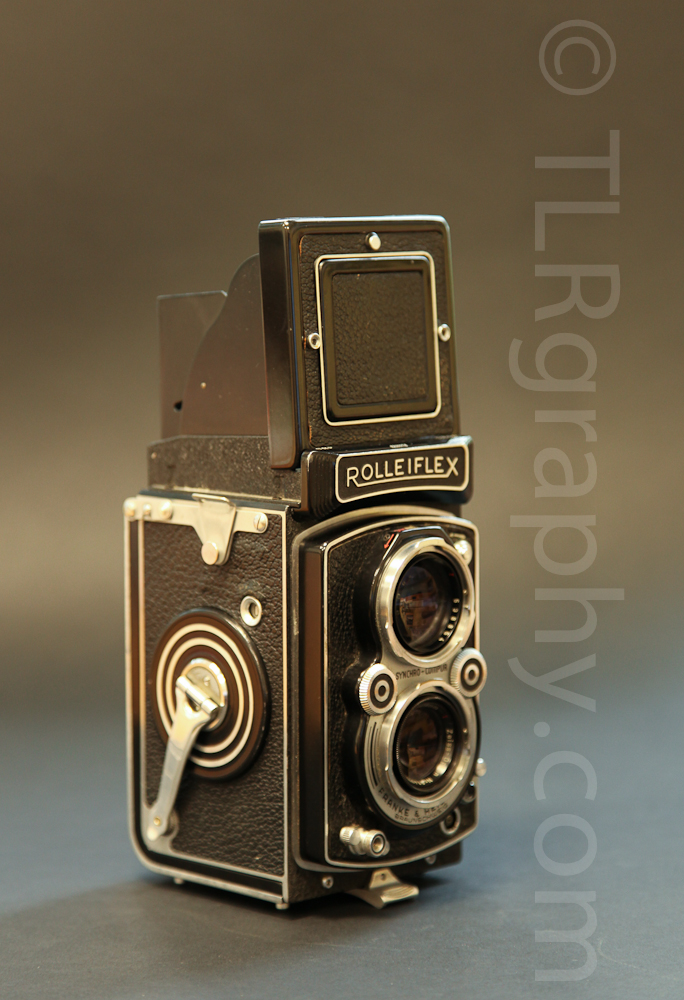
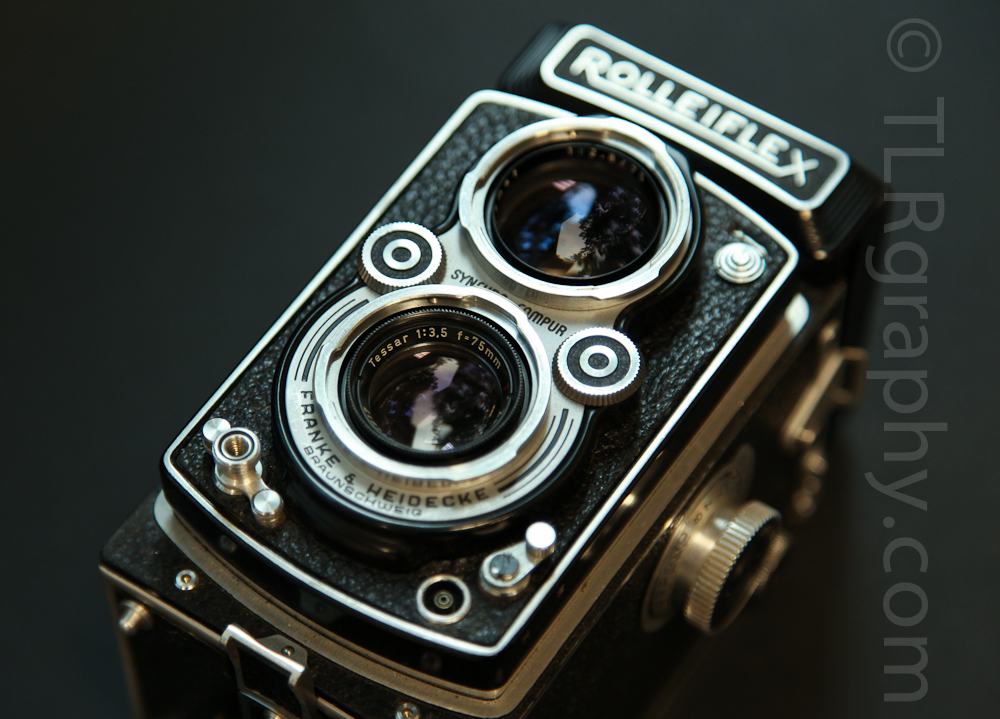
I have a set of Rolleiflex Automat K4A, produced in 1952. See some photos of this charming Rollei at the end of this post.
If you are looking for some sample photos of this camera, check out this set on Flickr

——————————————————————————————————
Rolleiflex is a series of medium format 120 roll film cameras manufactured by Franke & Heidecke, (now Rollei GmbH), in Germany.
The Square idea that changed photographic History Without any doubt was the introduction in 1929, of the first Rolleiflex Twin Lens Reflex ( TLR ), a sensation: an as ingenious as simple principle that quickly made the Rolleiflex THE must have professional camera all over the world. Producing high quality 6×6 cm square negatives in a compact very easy to operate camera, with the best lens available. Ther was no photographer who would not master one, no apprentice who would not wish to own one. For the professional, the Rolleiflex was like a gift from heaven, it meant a radical change in his/her creative work. Being able to work fast with a large size negative, light weight and superior quality made the choice as simple as important. There was no newspaper, no magazine, no photographic book that would not have some Rolleiflex photos in their publications. For decades, Rolleiflex cameras would have a decisive effect on photographic history. Many world-famous images originated from that small piece of fine mechanical art made bij the factory from Franke and Heidecke in Braunschweig, Germany. It was the beginning of a technical evolution that would be imitated by many other manufacturers around the Globe with sometimes successful but often poor copies of the bench-mark Rolleiflex. Franke & Heidecke are proof of being the master in that field , with the nowadays massive switch-over to digital, the traditional Rolleiflex TLR is still in production AND development. Very few companies in the world can boast such a long record with one basic design which has been improved on a regular basis yet still so closely resembles the original invention. from Rolleiclub
The Rolleiflex Automat Series
Rolleiflex Automat (X sync.) is a medium format TLR film camera manufactured by Franke & Heidecke, Braunschweig, Germany, and produced between 1949-51.
Automat (X sync.) is also known as Model K4 / 50.[1] [2]
The main difference is added flash X sync. than Automat Model 3.
All Rolleiflex Automat series was produced between 1937-1956. Automat name stands to introduced automatic film counter in 1937; this counter senses the thickness of the film backing to accurately begin counting frames, obviating the need for the ruby window that forced the photographer to read the frame number off the back of the film itself. Rolleiflex TLR film cameras were most famous and the standard of news and studio photographers for decads. Many photographers still shoot with Rolleiflex TLR film cameras and black-and-white film.
Specifications
- Serials: 1.100.000 – 1.168.000
- Film: 120 roll film, picture size 6x6cm & 35mm with Rolleikin I adapter set
- Taking lenses: All with filter Bayonet I
- Zeiss Tessar 75mm f/3.5
- Zeiss Oberkochen Opton 3,5/75
- Schneider Xenar 3,5/75
- Finder lens: Heidoscop Anastigmat 75mm f/2.8 filter Bayonet I
- Waist level finder with sports finder
- Shutter: Compur-Rapid 1-1/500 +T & B
- Standard X sync
- Self timer
- Winding: lever with auto stop, no red window, film pressure plate with black color coating
- Lever also cocks the shutter
- Double exposure prevention
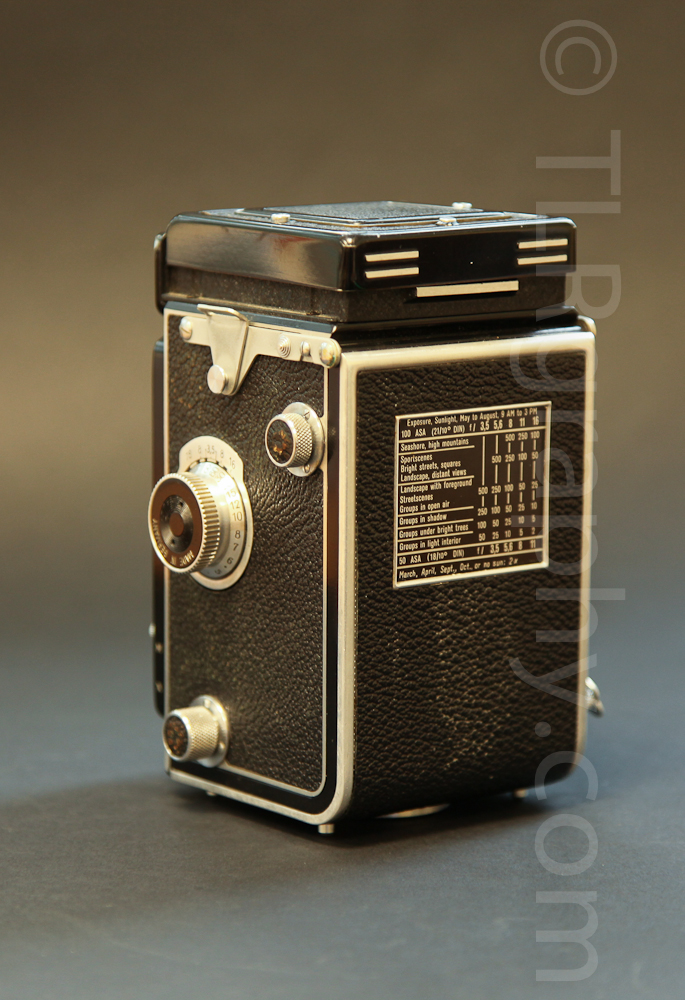
- Backcover: hinged with exposure guide table, removable that can be exchanged for a dual film format back
- Weight: 965g
- The camera could be used with Rolleikin I to use 35mm film & with the special glass plate film adapter. Also useable after modifications: Rolleimarin I under water housing, Rolleimeter, Rolleiflash, Rolleikin 2 with dual format back.
- The following parts of this model can be modernized: larger focusing knob & release safety lock.
Automat (MX-EVS) Model K4B
- Produced between 1954-56
- Serials: 1.428.001-1.739.999
- Main differences than Automat (MX) Model K4A:
- Shutter: [Synchro-Compur]] LVS (Light Value System)
- From serial 1.464.000 the EV coupling can be disengaged by pressing a button in the aperture wheel
- From serial 1.700.000 with a switch in the aperture wheel.
Automat (MX) Model K4A
- Produced between 1951-54
- Serials: 1.200.001 – 1.474.999
- Main differences than Automat (X sync.) Model K4/50:
- Added M and X flash sync.
- Shutter: Synchro-Compur
- From serial 1.268.000 the camera accepts hand grip and quick mount plate
The photos below are the actual photos of my Rolleiflex Automat K4A, made in Germany in 1952.



thanks for viewing
let me know if you are interested in getting this camera
tlrgraphy AT gmail DOT com
Price: SGD 525.00





 TLRgraphy