People with Ikoflex


Contaflex TLR – A legendary

In 1935, Zeiss Ikon brought forth the most advanced – and one of the heaviest cameras – of the day: the Contaflex (860/24) twin-lens reflex that used 35mm film. Camera has been produced only to 1943. The camera boasted the first built-in selenium light meter. The Contaflex featured interchangeable lenses, a focal plane shutter and a van Albada sports viewfinder. The lenses were the same as those offered for the Contax II but in a Contaflex mount. This heavy camera was considered to be one of the greatest German engineer’s cameras ever built. Contaflex had the first built-in selenium light meter, the first chrome finish and the first interchangeable lenses on a TLR. The viewing screen accommodates views for a range of lenses with concentric frames for them plus a very useful pop-up magnifier. The focusing screen is 2x the size of a 35mm neg and gives parallax correction for the 50mm standard lenses. The viewing lens is an 80mm or 8cm f2.8, which showed the same angle of view as the 50mm or 5cm f1.5 lens, but on a larger viewing screen and with shallower depth of field. The camera had interchangeable lenses with framelines in the finder for them all (except the wide angles) which required an auxiliary finder. The shutter is similar to the that used in the prewar Contax cameras, a vertically traveling focal plane shutter made of metal slats. It is heavy, 1.5kg, about twice as much as the Contax I. The lenses are also larger and heavier than their Contax counterparts, and are difficult to mount. The view through the finder isn’t bright by today’s standards, although it’s not too bad when compared to some of the tiny viewfinders of the day. The magnifier is a necessity if you plan on focusing. Between the waist level viewing, with it’s reversed image, and the need for a magnifier, the only way you can photograph anything moving is with the Albanda finder. But in doing that, you’ve just turned your overly expensive and heavy camera into a viewfinder camera. And if you think photographing action is bad, try taking a picture in portrait format (as opposed to landscape). You must hold the camera on it’s side at eyelevel, parallel to the subject. Now, instead of everything being backwards, it is upside down! And the controls are in the most inconvenient places. This is a camera that sold in 1939 for $250 with the 50/2.8 Tessar, and $372 with the 1.5 Sonnar. With the 50/1.5, it was the tied for being the most expensive still camera in their catalog with the Contax III with it’s 50/1.5. A range of accessories were offered for it, which are rarely seen today. They included a special lens shade which clips to the body, a cut film adapter back, a microscope adapter and an special arm for the copy stand.
A Review from pacific rim camera

Contaflex TLR, shown with 50/1.5 Sonnar This is one of the most impressive cameras ever built. Introduced in 1935, it was the first camera to have a built in exposure meter, and the first available in chrome finish. This was the flagship camera of the Zeiss line at one of their proudest moments. The viewing lens is an 80/2.8, which showed the same angle of view as the 50mm normal, but on a larger viewing screen, and with shallower depth of field. The camera had interchangeable lenses, with framelines in the finder for them all, except the wide angles, which required an auxiliary finder. The shutter is similar to the shutter used in the prewar Contax cameras, a vertically traveling focal plane shutter made of metal slats.
This is a perfect example of how the German photo industry was often driven by engineers. They conceived the camera as a feat of engineering. Many of the solutions are ingenious, and the camera is truly a marvel to behold. But as a instrument for making photographs, it is miserable. It is heavy, weighing 3-1/4 lbs (1.5kg), about twice as much as the Contax I. The lenses are also larger and heavier than their Contax counterparts, and are difficult to mount.
The view through the finder isn’t bright by today’s standards, although it’s not too bad when compared to some of the tiny viewfinders of the day. The magnifier is a necessity if you plan on focusing. Between the waist level viewing, with it’s reversed image, and the need for a magnifier, the only way you can photograph anything moving is with the Albanda finder. But in doing that, you’ve just turned your overly expensive and heavy camera into a viewfinder camera. And if you think photographing action is bad, try taking a picture in portrait format (as opposed to landscape). You must hold the camera on it’s side at eyelevel, parallel to the subject. Now, instead of everything being backwards, it is upside down! And the controls are in the most inconvenient places.
This is a camera that sold in 1939 for $250 with the 50/2.8 Tessar, and $372 with the 1.5 Sonnar. With the 50/1.5, it was the tied for being the most expensive still camera in their catalog with the Contax III with it’s 50/1.5. A range of accessories were offered for it, which are rarely seen today. They included a special lens shade which clips to the body, a cut film adapter back, a microscope adapter and an special arm for the copy stand.
Contaflex TLR Lenses
35/4.5 Orthometer
35/2.8 Biogon
50/2.8 Tessar
50/2 Sonnar
50/1.5 Sonnar
85/4 Triotar
85/2 Sonnar
135/4 Sonnar

The frame lines in the finder.

A look at the lens mount. The notch connects the lens to the focus on the camera.

Four of the lenses, the 35/2.8 Biogon, the 85/2 Sonnar, the 50/1.5 Sonnar and the 50/2 Sonnar.

The 35/2.8 Biogon mounted on the camera.

The 85/2 Sonnar mounted.

The 135/4 Sonnar mounted.

The 135/4 Sonnar.

The eveready case for the Contaflex.

The front cap.

The cut film adapter back, with holder and ground glass focus screen.

The camera apart, in case you were thinking of taking one apart to see what is inside.

The camera apart, from the back showing the shutter. The curtain straps are broken on this camera
Yashica Mat 124G Review – One of the most popular TLR

I have this TLR for over a year by now. It has been a pleasant experience with this classic camera and it is time for a report to share what I get fascinated with this TLR and perhaps note down some difference in experience that I have with the Rolleiflex Automat MX-EVS.

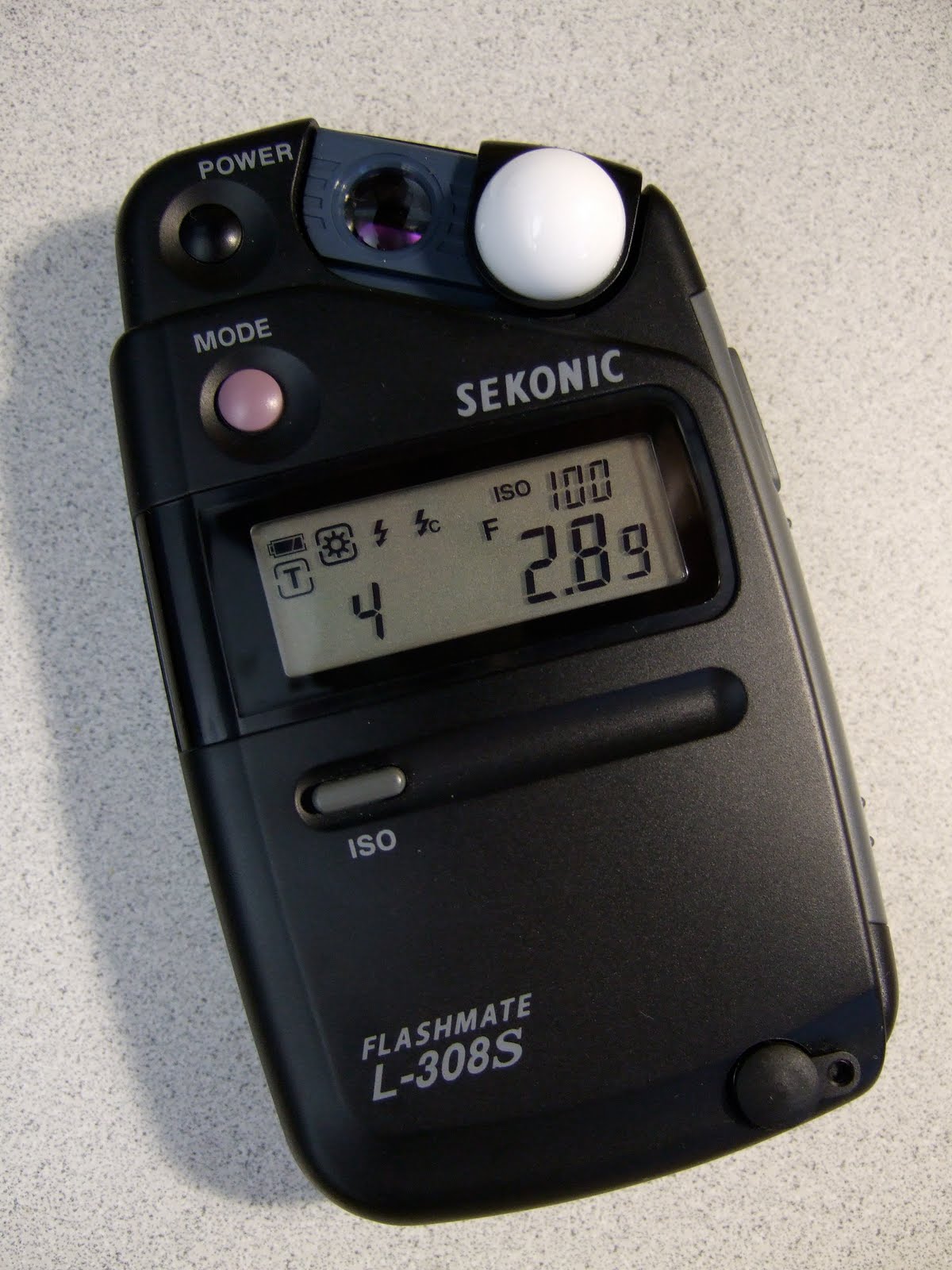 First of all, it has a built-in meter and it is a convenient feature to have. My Yashica works surprisingly well with the built-in meter when I first got it. After halve year of storage, I forget to unload its battery and I got its metering all ruined due to corrosion of battery. I opened up the top waist level finder and it seems like a do-able job to re-wire the metering but so far I have not attempted to fix the broken meter. Instead, I added a Sekonic flashmate L-308S to help with the metering.
The Sekonic light meter works quite well with my Yashica. I tried both b&w and color films on my Yashica Mat 124G and both come out nicely. The Yashinon 80mm f/3.5 is reasonably sharp and has good contrast in the color photos. The next thing that I need to try is to use it more on various films and research if I can use a flash on the Yashica.
 Shot with Fuji Acros 100, Sekonic L-308S
The Tech Museum of San Jose
 Shot with Fuji Acros 100
metered with original meter
 Shot with Fuji Acros 100
metered with Sekonic L-308S
 Shot with Fuji Acros 100
metered with Sekonic L-308S
 Shot with Kodak Ektar 100
metered with Sekonic L-308S
 Shot with Kodak Ektar 100
metered with Sekonic L-308S
Impressions & Notes
- The Yashinon 80mm f/3.5 is reasonably sharp and I am well pleased with the results.
- The built-in meter is a nice feature to have but mine is unfortunately broken. It is important to remember my lesson to remove the battery when not in operation.
- Unlike the Rolleiflex Automat MX-EVS that I had, its focusing screen is easier for me to focus. The ground glass with circular rings along with the magnifier provide me enough detail in good lighting to focus at ease. It takes some practice and it is more difficult for indoor type of lighting. Overall, I think I find focusing easier on the Yashica than my Rolleiflex.
- The film rewind is not as refined and controlled as the solid rewind lever in the Rolleiflex. The rewind lever in Yashica does not give you the confidence for long lasting lever. The build quality in Yashica can’t match the solid build quality in the Rolleiflex. The build in Yashica is good but not outstanding like the Rolleiflex.
- I managed to open up the top portion of its waist level finder and I managed to clean up the internal mirror housing and it can be done with caution. Re-assembly can be tricky and I will try to update this post with links to instructions for cleaning the internal mirror.
- It is lightweight and that is the best part about this TLR. With a good neck strap, this TLR is very portable for hours of shooting. You will end your film roll wanting more to continue the shooting. It is very pleasant to carry around for a longer period of shooting time as in a half day of shooting.
- I recently use the Yashica with a lightweight tripod and I can frame with more confidence for critical angle and position.
- It takes sometime to get used to the reverse orientation in framing but by the time I get to my 3rd roll, I no longer have that awkward feeling in unfamiliar framing withTLR
- The Yashica opens up my desire for more square photos in 6×6. It is very addictive in the process.
- Scanning at home with a limited flatbed is MUCH easier with 120 films when compared to 135 films
- It is unfortunate to note that many Yashica Mat 124G are over-priced in the used market. It used to be in the $100’s and now a good copy is frequently bid up to over $200. And it is always a risk on the unknown conditions subject to the mercy and honesty of the seller in the listing. My copy is likely not the norm in the eBay as it is just really in Excellent condition and I was one of those who bid Yashica over $200. Shame on Hin! In my opinion it should be much less as in $150 or so.
 TLRgraphy