Yashica Mat 124 in-depth review
Yashica Mat 124 – Review by Karen Nakamura
Overview and Personal Comments
The Yashicamat 124 is a twin-lens reflex (TLR) camera that is basically a copy of the Rolleiflex. It uses 120 size film (medium format) to shoot 6 x 6 square format photos (same as a Hasselblad). Using the text or images on this website without permission on an ebay auction or any other site is a violation of federal law.
I purchased this camera a couple of years ago to see if medium format was my thing. It was, the Yashica had excellent resolution and the tonality of medium format positives just blew me away.
Unfortunately, I was so entranced by the Yashicamat, I later on bought a Mamiya RB67 system and never used the Yashicamat after that. The RB67 is for the studio, while I have a Koni-Omega Rapid M for outdoor medium format photography. It’s just a bit difficult to frame when things are reversed in the TLR finder. I like the look of the 124 and the little Yashica 44LM, but I doubt I’ll ever use them.
Interesting quirks
The Yashicamat 124G is the successor to the 124. Everyone seems to want the 124G. The only change the 124G has was to add Gold meter contacts. That’s it. Which is odd since I’ve seen 124Gs that went for $400, but 124s are relatively cheap. They use the EXACT SAME OPTICS! Hmm.. People are pretty stupid. You don’t buy Yashicamats for the lightmeter, heck most of them are non-linear anymore. They use the EXACT SAME OPTICS!*
* OK, so the 124G had a nicer finish on the outside, BUT it also used wimpier (i.e., cheaper) gears. The 124 has sturdier internal mechanisms.
Sample Pictures
The Yashicamat 124 takes simply astoundingly sharp pictures. Here are some samples shot on Fuji Velvia (an E-6 slide film) and scanned with the Epson Perfection 2400, a standard flatbed scanner with a transparency adaptor that costs around $300. The resulting files are 5400 x 5400 pixels large, or 90 megabytes in size at 24 bit depth (at the scanner’s full 48 bit depth, the files are 180 megabytes large). That’s the equivalent of a 30 megapixel digital camera! You can print the scans at 240 dpi at a whopping 22″ x 22″ without interpolating. Try that on your $2000 digital camera!
A reduced version of each photo is shown along with a 8x zoom up. To put the zoomed in version in perspective, to view the zoomed version at 100%, the original file would have to be printed at almost 100″ x 100″ or an 8′ x 8′ mural. The actual slide shot is even sharper than the scan as the Epson 2450 is really a 1200 dpi scanner, not a 2400 dpi one.The slides themselves are extremely crisp. You can count the number of leaves on the trees in the autumnal photo (sample #2).
If you want the original sample files (about 3 megabytes compressed at JPEG 8; about 20 megabytes compressed at JPEG 12), please let me know and I will arrange to make them available.
 |
|
 |


The slight unsharpness here is caused by the scanner. With a loupe, you can make out the features of this person and easily identify him. Remember that this is the detail from an image blown up to about 8′ x 8′!
Technical Details
|
Camera Name
|
Yashicamat 124 |
|---|---|
|
Manufacturer
|
Yashica |
|
Place of Manufacture
|
Body: Japan |
|
Date of Manufacture
|
1968 ~ 1971 |
|
Focusing System
|
Twin lens reflex |
|
Fixed Lens
|
Taking lens: 80mm f/3.5 Yashinon (multicoated) Viewing lens: 80mm f/3.5 Yashinon (multicoated) -Yashinons are 4 element Tessar types |
|
Shutter
|
Copal S-V 1 sec – 1/500 sec. |
|
Metering System
|
CdS cell mounted on camera body (above the lens ATL) – uncoupled match needle type GN 1-10 |
|
Flash Mount
|
M-X switch Cold-shoe mount on left side PC-cable attachment on front side |
|
Film type / speeds
|
Type 120/220 film (medium format) ASA |
|
Battery type
|
PX625 |
| Use of this chart, text, or any photographs in an eBay auction without permission will result in an immediate IP violation claim with eBay VeRO. Violators may have their eBay account cancelled. | |
About Yashica/Kyocera/Contax
The Yashica Corporation began making cameras in 1957, releasing its first model in 1958 (the Yashica 35). They produced a very well regarded series of twin-lens-reflex (TLR) medium format cameras under the Yashica-Mat brand and 35mm rangefinders under the Yashica Electro name. Yashica became a subsidiary of the Kyocera Corporation in October of 1983. For the next two decades, Kyocera continued to produce film cameras under the Contax marquee, including a very nice 35mm Contax SLR series (which used Zeiss lenses), a medium format system, and the Contax G1/G2 rangefinders (also with Zeiss glass).The Yashica name was only used for a small series of dental cameras and point and shoots. In March of 2005, Kyocera announced that it would cease production and sales of film and digital cameras under the Contax marquee. Thus ends 30 years of a wonderful camera line. The Contax name will most probably revert back to the Zeiss foundation, thus who knows what will happen in the future. Right now, the name “Yashica” appears to have been bought by a Chinese company for their inexpensive digital cameras.
On the Net
|
Seriously… Rolleiflex, SGD 525.00
There is kind of saying that… if you are into medium format photography, you must have a Rolleiflex…
What is amazing about Rolleiflex?
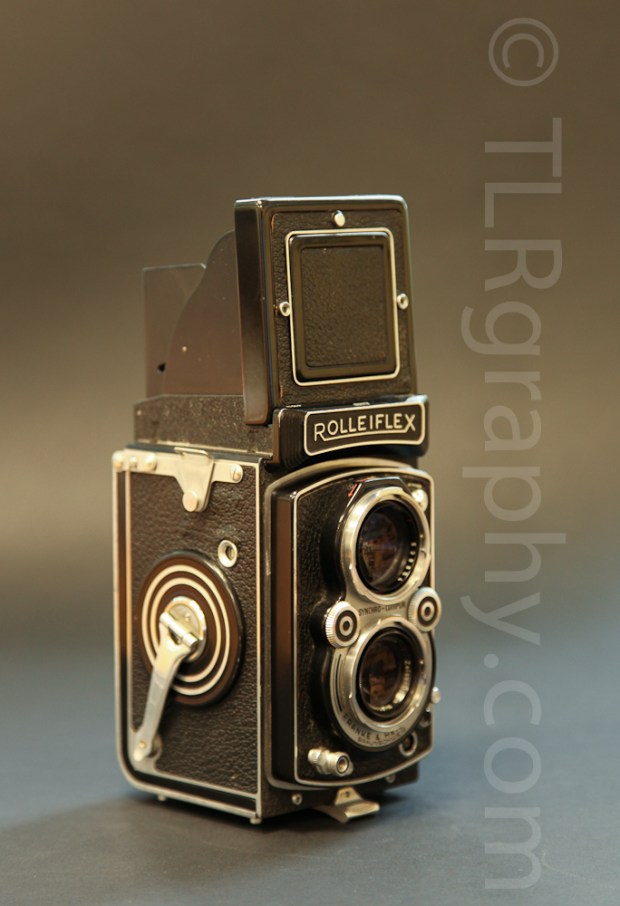
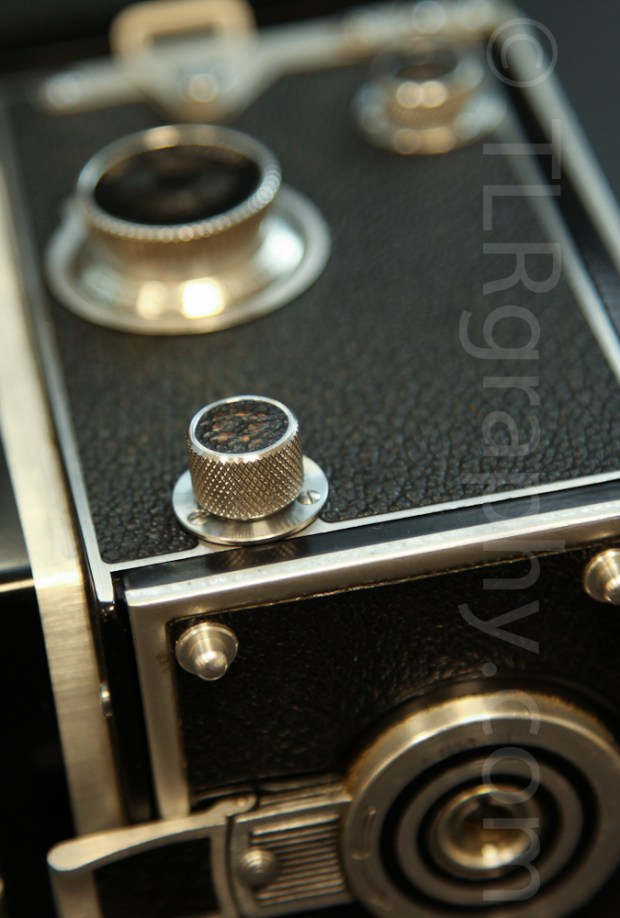
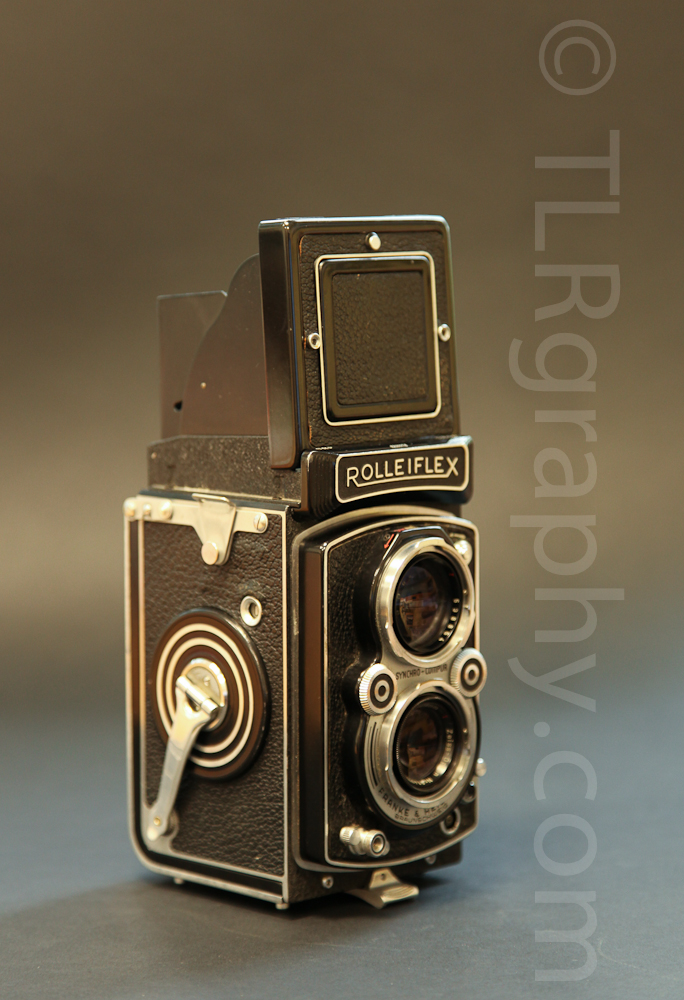
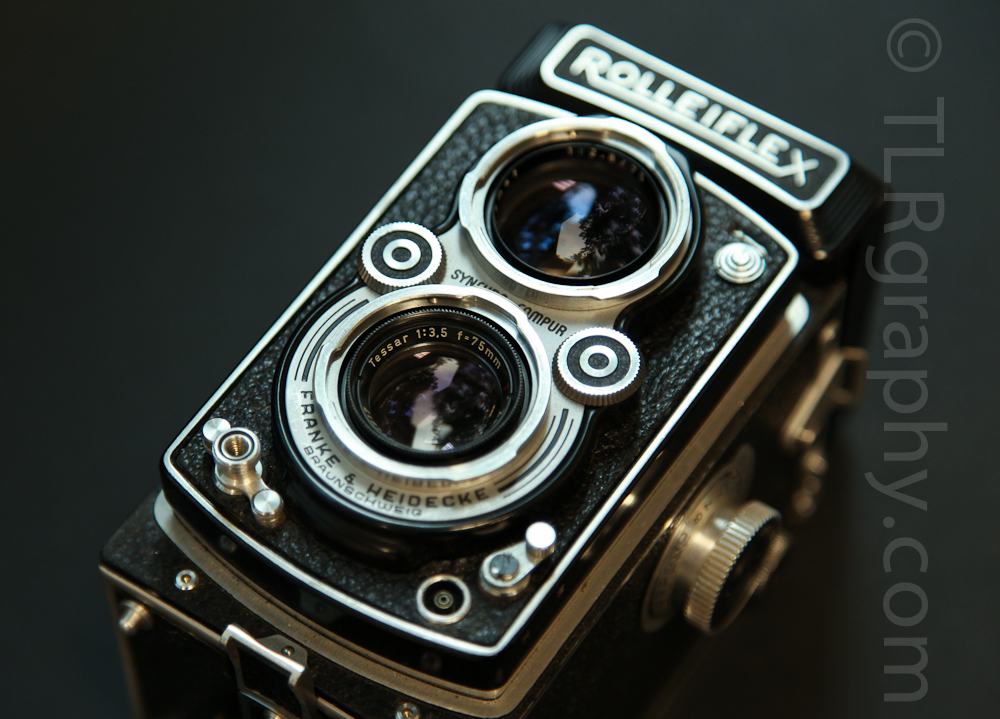
I have a set of Rolleiflex Automat K4A, produced in 1952. See some photos of this charming Rollei at the end of this post.
If you are looking for some sample photos of this camera, check out this set on Flickr

——————————————————————————————————
Rolleiflex is a series of medium format 120 roll film cameras manufactured by Franke & Heidecke, (now Rollei GmbH), in Germany.
The Square idea that changed photographic History Without any doubt was the introduction in 1929, of the first Rolleiflex Twin Lens Reflex ( TLR ), a sensation: an as ingenious as simple principle that quickly made the Rolleiflex THE must have professional camera all over the world. Producing high quality 6×6 cm square negatives in a compact very easy to operate camera, with the best lens available. Ther was no photographer who would not master one, no apprentice who would not wish to own one. For the professional, the Rolleiflex was like a gift from heaven, it meant a radical change in his/her creative work. Being able to work fast with a large size negative, light weight and superior quality made the choice as simple as important. There was no newspaper, no magazine, no photographic book that would not have some Rolleiflex photos in their publications. For decades, Rolleiflex cameras would have a decisive effect on photographic history. Many world-famous images originated from that small piece of fine mechanical art made bij the factory from Franke and Heidecke in Braunschweig, Germany. It was the beginning of a technical evolution that would be imitated by many other manufacturers around the Globe with sometimes successful but often poor copies of the bench-mark Rolleiflex. Franke & Heidecke are proof of being the master in that field , with the nowadays massive switch-over to digital, the traditional Rolleiflex TLR is still in production AND development. Very few companies in the world can boast such a long record with one basic design which has been improved on a regular basis yet still so closely resembles the original invention. from Rolleiclub
The Rolleiflex Automat Series
Rolleiflex Automat (X sync.) is a medium format TLR film camera manufactured by Franke & Heidecke, Braunschweig, Germany, and produced between 1949-51.
Automat (X sync.) is also known as Model K4 / 50.[1] [2]
The main difference is added flash X sync. than Automat Model 3.
All Rolleiflex Automat series was produced between 1937-1956. Automat name stands to introduced automatic film counter in 1937; this counter senses the thickness of the film backing to accurately begin counting frames, obviating the need for the ruby window that forced the photographer to read the frame number off the back of the film itself. Rolleiflex TLR film cameras were most famous and the standard of news and studio photographers for decads. Many photographers still shoot with Rolleiflex TLR film cameras and black-and-white film.
Specifications
- Serials: 1.100.000 – 1.168.000
- Film: 120 roll film, picture size 6x6cm & 35mm with Rolleikin I adapter set
- Taking lenses: All with filter Bayonet I
- Zeiss Tessar 75mm f/3.5
- Zeiss Oberkochen Opton 3,5/75
- Schneider Xenar 3,5/75
- Finder lens: Heidoscop Anastigmat 75mm f/2.8 filter Bayonet I
- Waist level finder with sports finder
- Shutter: Compur-Rapid 1-1/500 +T & B
- Standard X sync
- Self timer
- Winding: lever with auto stop, no red window, film pressure plate with black color coating
- Lever also cocks the shutter
- Double exposure prevention
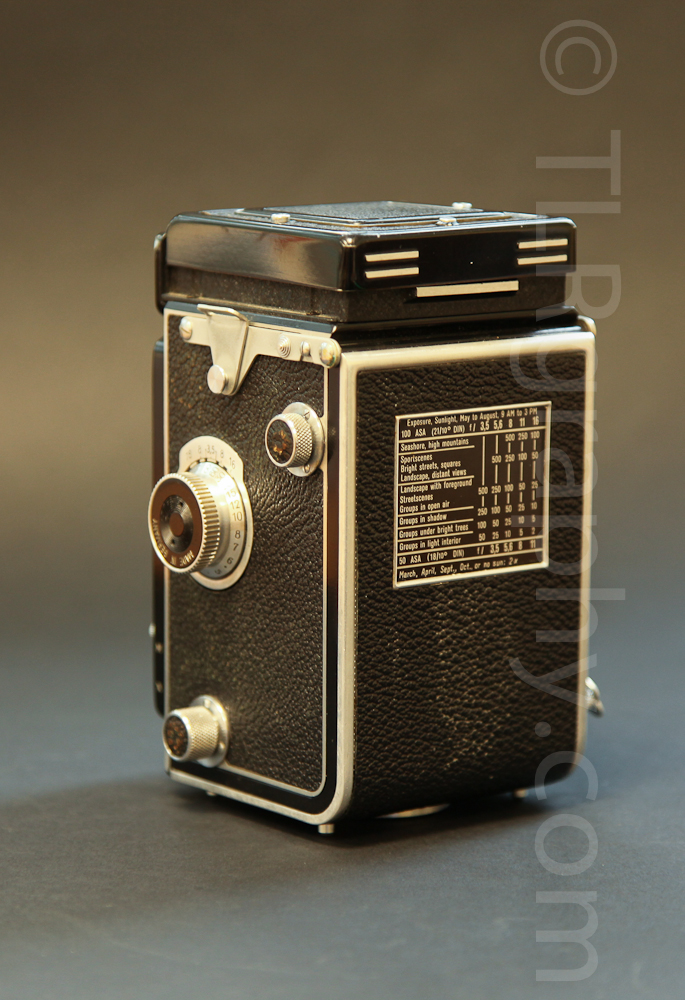
- Backcover: hinged with exposure guide table, removable that can be exchanged for a dual film format back
- Weight: 965g
- The camera could be used with Rolleikin I to use 35mm film & with the special glass plate film adapter. Also useable after modifications: Rolleimarin I under water housing, Rolleimeter, Rolleiflash, Rolleikin 2 with dual format back.
- The following parts of this model can be modernized: larger focusing knob & release safety lock.
Automat (MX-EVS) Model K4B
- Produced between 1954-56
- Serials: 1.428.001-1.739.999
- Main differences than Automat (MX) Model K4A:
- Shutter: [Synchro-Compur]] LVS (Light Value System)
- From serial 1.464.000 the EV coupling can be disengaged by pressing a button in the aperture wheel
- From serial 1.700.000 with a switch in the aperture wheel.
Automat (MX) Model K4A
- Produced between 1951-54
- Serials: 1.200.001 – 1.474.999
- Main differences than Automat (X sync.) Model K4/50:
- Added M and X flash sync.
- Shutter: Synchro-Compur
- From serial 1.268.000 the camera accepts hand grip and quick mount plate
The photos below are the actual photos of my Rolleiflex Automat K4A, made in Germany in 1952.



thanks for viewing
let me know if you are interested in getting this camera
tlrgraphy AT gmail DOT com
Price: SGD 525.00





Zeiss Ikoflex Twin Lens Reflex – Models Overview
Zeiss Ikoflex Twin Lens Reflex
| Zeiss no. | model | yr built | lens | shutter | comments |
|---|---|---|---|---|---|
| 850/16 | Ikoflex | 1934-37 | f6.3 or 4.5/80 Novar | Compur-Rapid, Klio, Derval | “coffee can” model, lever focus 1936, knob focus after ’36 |
| 850/16 | Ikoflex I | 1939-51 | f3.5/75 Tessar | Compur, Klio, Prontor S | same as Ikoflex II from 1937-39 (851/16) |
| 851/16 | Ikoflex II | 1936-39 | f3.8 CZJ Triotar or f3.5/75 Tessar | Compur-Rapid | lever focus in1937, knob focus after ’37, continued as Ikoflex I (850/16) after 1939 |
| 851/16 | Ikoflex II | 1939-51 | f3.5/70 Novar or f3.5/75 Tessar | Prontor | similar to Ikoflex II of 1937-39 |
| 854/16 | Ikoflex Ia | 1952-56 | f3.5/70 Novar or f3.5/70 Tessar | Prontor | shutter release located on top next to viewfinder |
| 856/16 | Ikoflex Ib | 1956-58 | f3.5/75 Novar or f3.5/75 Tessar | Prontor | improved version of Ia, shutter release located on side next to taking lens |
| 886/16 | Ikoflex Ic | 1956-60 | f3.5/75 Novar or f3.5/75 Tessar | Prontor | metered version of Ib |
| 852/16 | Ikoflex II/III | 1938-40s | f3.5/75 Tessar or f3.5/75 Triotar | Compur-Rapid or Compur | new style Ikoflex II after 1939 |
| 855/16 | Ikoflex IIa | 1950-52 | f3.5/75 Tessar | Compur-Rapid | early version with peep window on each side of taking lens |
| 855/16 | Ikoflex IIa | 1953-56 | f3.5/75 Tessar | Compur-Rapid | restyled version with peep windows directly over viewing lens |
| 853/16 | Ikoflex III | 1939-40 | f2.8/80 Tessar | Compur-Rapid | Albada finder |
| 887/16 | Ikoflex Favorit | 1957-60 | f3.5/75 Tessar | Synchro-Compur | LVS light meter, last Ikoflex |
 TLRgraphy